
Excavators at Hattusa, the capital of the Hittite Empire in Çorum province, have identified a clay tablet fragment as part of a copy of the Kadesh Peace Treaty, widely regarded as the oldest known peace agreement in the world.
Culture and Tourism Minister Mehmet Nuri Ersoy announced the find on Sept. 21, chosen because it is the International Day of Peace. Writing on social media, he said traces of a peace thousands of years old had been found "in the soil of Anatolia."
The fragment came to light during excavations at Büyükkale, the royal citadel of Hattusa, close to a structure known as Building E. Only one face of the piece has survived. Specialists spent around a year examining it before confirming what it was.
Clauses on people who fled
The legible lines correspond to Articles 12 to 20 of the treaty, the provisions that dealt with people who escaped from one kingdom and took refuge in the other. The surviving text is broken and incomplete, but it refers to people fleeing from Egypt and from Hatti, the Hittite state, and includes wording on homes not being destroyed. Ersoy said those lines carry "a powerful message" from the distant past, and in his post he also referred to the situation facing Palestinians.
The treaty was concluded in the 13th century B.C. between the Hittite King Hattusili III and Egypt's Ramesses II, some years after the Battle of Kadesh between Ramesses and Hattusili's predecessor Muwatalli. It is notable as the only treaty of the ancient Near East for which the versions kept by both parties survive. The Egyptian text was carved in hieroglyphs on temple walls at Karnak and the Ramesseum, while the Hittite side's copy was written in Akkadian cuneiform on clay.
Pieces spread across four museums
Earlier fragments of the Akkadian version were unearthed at Hattusa during excavations between 1906 and 1912. They are now divided among the Istanbul Archaeological Museums, the Museum of Anatolian Civilizations in Ankara, the Vorderasiatisches Museum in Berlin and the State Hermitage Museum in St. Petersburg. An enlarged replica of the treaty is displayed at United Nations headquarters in New York.
Hattusa, near the town of Boğazkale, was added to UNESCO's World Heritage List in 1986. Work at Büyükkale is continuing, and the team hopes further digging will turn up more of the treaty's missing pieces.
Sources
- Tablet fragment found in Türkiye adds piece to world's oldest known peace treaty – Anadolu Agency
- Hattuşa'da Kadeş Antlaşması'nın Yeni Bir Nüshası Bulundu – Arkeofili
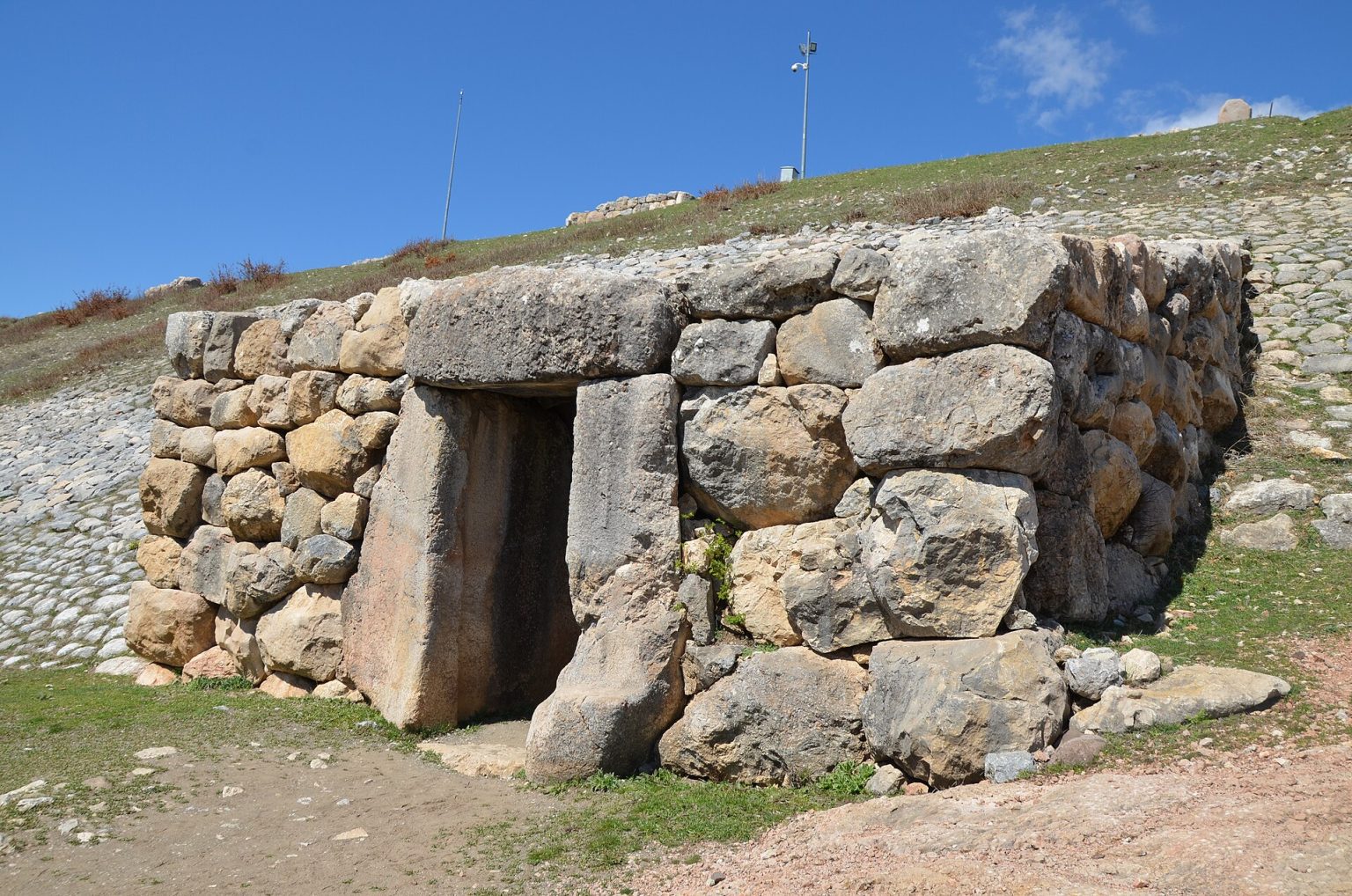
Photo: Carole Raddato from FRANKFURT, Germany / CC BY-SA 2.0, via Wikimedia Commons