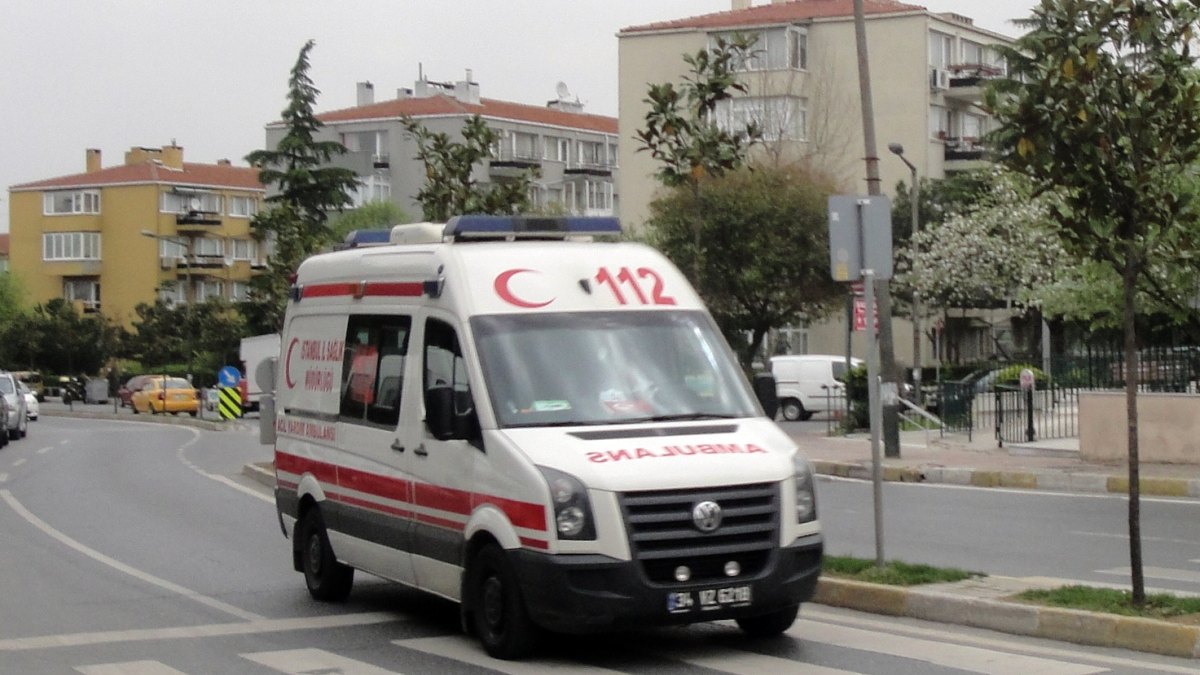

Traffic, narrow streets and illegally parked cars are seriously delaying emergency medical response in parts of Istanbul, the head of the city’s ambulance service said, with historic districts on the European side among the worst affected.
Provincial Ambulance Service Chief Physician Murat Lafçı said response times in Fatih and Beyoğlu are above the city average, according to a report published on Oct. 14. A 2026 analysis identified Sultanahmet, Nişanca and Tahtakale in Fatih, and Kulaksız and Kılıçali Paşa in Beyoğlu, as neighbourhoods with delays.
Hundreds of stations, thousands of cases
Istanbul’s emergency ambulance network is made up of 238 stations on the European side and 141 on the Asian side, plus six mobile teams. Crews handle between 2,500 and 3,000 cases a day as well as nearly 500 transfers between hospitals.
Calls to 112 are assessed at a command centre, which dispatches the nearest available team via tablet. In urban areas, the average response time is 8 to 8.5 minutes, while in rural parts of the province it takes 13 to 15 minutes. Helicopters are used for rural cases that are difficult to reach by road.
Drivers asked to keep routes clear
Lafçı urged drivers not to park in ways that block ambulance routes. He said Health Ministry public information campaigns had improved compliance with the "zipper system," under which motorists move aside to open a lane for ambulances.
Türkiye merged its health, police and fire emergency lines into a single 112 number in 2021. Since then, calls asking for things like a locksmith or help with a broken phone have fallen, although some groundless calls still come in.
Istanbul is home to more than 15 million people and frequently suffers severe gridlock, while street layouts dating back centuries in its oldest quarters make emergency logistics harder still.
For residents and visitors, the practical message from the service is straightforward: keep 112 for genuine emergencies, avoid parking on narrow streets in a way that blocks access, and make way for ambulances in traffic.
Sources
Photo: Reise Reise / CC BY-SA 3.0, via Wikimedia Commons