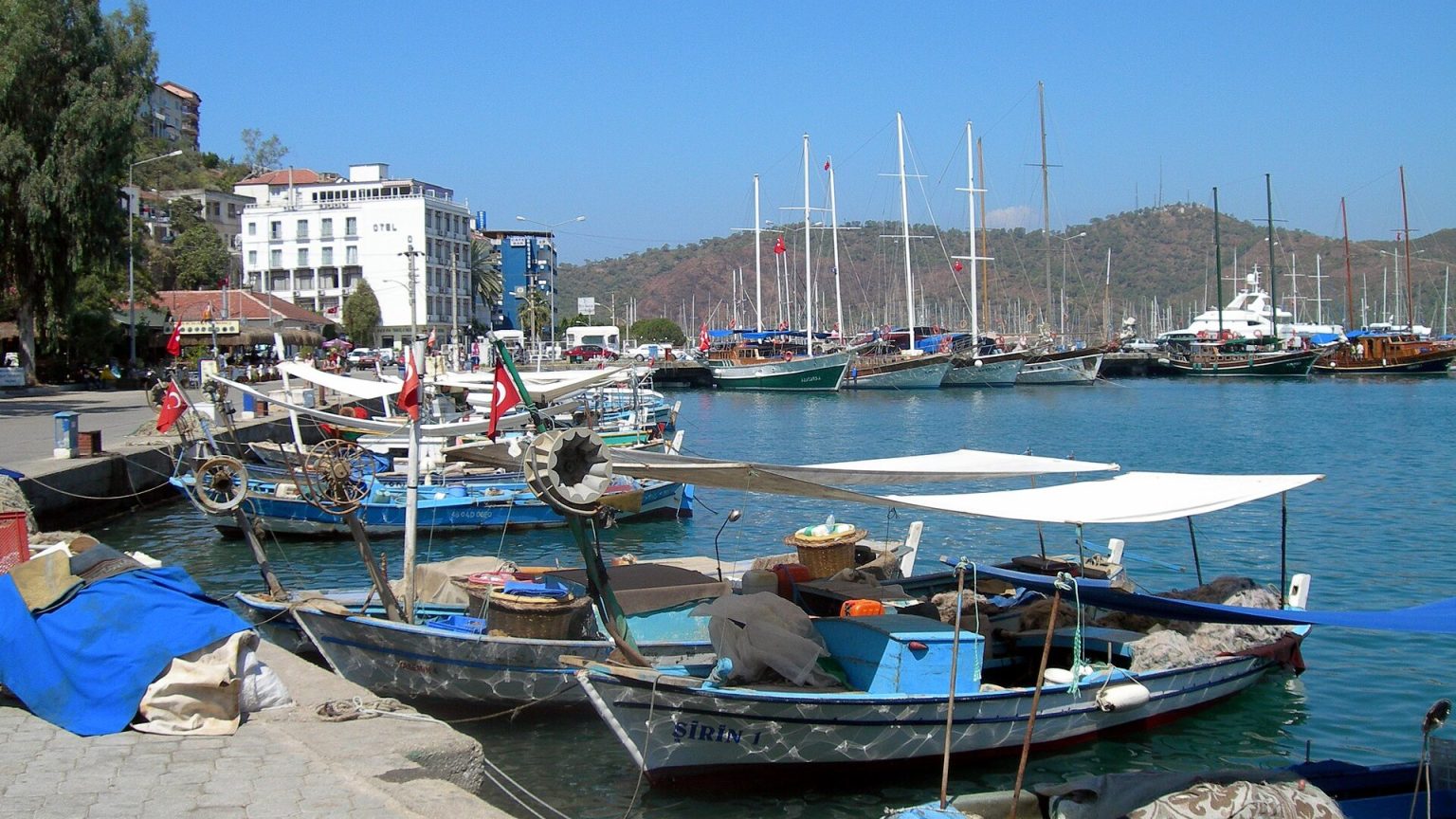

Fethiye, on Türkiye’s south-west coast in Muğla province, is one of the country’s longest-established homes for foreign residents and second-home owners, especially from the UK. It combines a working market town and marina with resort villages such as Ölüdeniz and Hisarönü, the beach suburb of Çalış and the yachting harbour of Göcek. This guide covers what daily life is like, how the main neighbourhoods differ, what homes cost in 2026, and the checks buyers should make.
Key points
- Fethiye district had a registered population of about 187,000 at the end of 2025, according to TÜİK figures. The number of people in the area rises sharply in summer.
- Dalaman Airport is roughly 45 kilometres away, but most of its international flights are seasonal.
- A May 2026 survey of summer-home markets put Fethiye’s average price at about 76,000 lira per square metre. That is well below Bodrum, but above the national average.
- Unlicensed building is a known problem in the district, so checking permits and the occupancy certificate is essential.
- Summers are hot and dry. Winters are mild but wet, and many resort businesses close from November to April.
Fethiye at a glance
Fethiye is a district of Muğla, a province of almost 1.1 million registered residents at the end of 2025. Muğla’s tourism areas are thought to host many more people who live in second homes without registering their address there. The town centre sits on a sheltered bay with a marina, a long seafront promenade and a busy harbour for day-trip boats. Most buildings are low-rise. The town was largely rebuilt after the 1957 earthquakes, which damaged or destroyed most of its buildings.
The district is also rich in history. Lycian rock tombs overlook the town, and the abandoned village of Kayaköy lies in the hills above. In 2025, museums and archaeological sites in Fethiye received about 275,000 visitors, roughly 87,000 of them at Kayaköy, according to figures reported by local media. The Lycian Way long-distance trail starts nearby. Our Lycian Way hiking guide covers the best autumn stages.
Getting there and getting around
Dalaman Airport is the nearest international gateway, about 44 kilometres from Fethiye, or roughly 45 minutes to an hour by road. It handled about 1.85 million passengers in the first half of 2026, according to provisional figures from the State Airports Authority (DHMİ). The airport is busiest from April to October, when charter and low-cost flights link it to the UK and many European cities. In winter, direct international flights are far fewer, so residents should plan winter travel with connections in mind. Antalya Airport, much further east along the coast, offers more year-round routes but involves a long road journey.
Locally, frequent dolmuş minibuses link the town centre with Çalış, Ölüdeniz, Hisarönü, Ovacık and nearby villages, and intercity buses run along the coast. Many residents of the hill villages still find a car necessary.
Climate
Fethiye has a Mediterranean climate. Long-term averages show daytime highs of about 34–35°C in July and August, with nights rarely below 20°C. January highs are around 16°C and lows around 5–6°C. Annual rainfall is a little over 800 mm, most of it between November and February, often in heavy downpours. Spring and autumn are the most comfortable seasons for viewing property and for outdoor activities. Late October brings the Ölüdeniz Air Games festival, with paragliders launching from Babadağ, nearly 2,000 metres above the lagoon.
Homes built for summer living can feel cold and damp in winter. Ask about insulation, heating (air-conditioning units, a wood burner or underfloor heating) and how the property copes with heavy rain before you buy.
Neighbourhoods compared
Town centre, Karagözler and Tuzla. These areas suit buyers who want to live year-round, close to shops, the marina, health services and public offices. Most homes are flats in small blocks. Karagözler, west of the marina, has views across the bay. Central areas stay lively in winter.
Çalış. This long, flat beach north of the centre has a strong British community, sunset views and a promenade lined with cafés. It is popular with retirees and families. Homes range from flats to small villa complexes. Some seafront businesses are seasonal, but the suburb is close enough to town to be lived in year-round.
Ölüdeniz, Ovacık and Hisarönü. These are the classic holiday villages, set on the road up to Ölüdeniz’s lagoon and Belcekız beach. Ovacık and Hisarönü have many villas and complexes with pools that are let to holidaymakers. They are very busy in summer and much quieter in winter. Research by valuation firm EVA, reported in June 2026, put villas in Ölüdeniz at about 11–55 million lira, and flats at about 7–12 million lira.
Kayaköy and the hill villages. Stone houses, olive groves and larger plots attract buyers who want peace and space. Expect more dependence on a car and more questions about zoning and land status.
Göcek. This marina village west of Fethiye is popular with sailors and the most upmarket part of the district. Prices are high, and the property supply is limited.
Inland villages such as Yeşilüzümlü and Üzümlü. These offer cooler summers, traditional houses and lower prices, at the cost of longer drives to the coast.
What property costs in 2026
Fethiye sits in the middle of the coastal price range. A study of summer-home markets published in June 2026 put the district’s average at about 76,100 lira per square metre, with an average home price of about 10 million lira. That was around $205,000 at mid-October 2026 exchange rates of roughly 49 lira to the dollar. TSKB Gayrimenkul Değerleme put the average resort-season asking price at about 80,000 lira per square metre. For comparison, the same studies placed parts of Bodrum above 150,000 lira, and Endeksa and Emlakjet put the national average at 42,488 lira in August 2026. Across Muğla province as a whole, the July 2026 average was 87,244 lira per square metre, the highest of any province.
Nominal prices are still rising, but more slowly than inflation. The central bank’s index rose 23% nationally in the year to August, but fell 6.5% in real terms. For a comparison with other resort markets, read our guide to where to buy property in Turkey.
Renting first is a sensible option. Muğla had the second-highest average rent of any province in August 2026, at about 40,940 lira a month, behind only Istanbul. Rents are pushed up by tourism demand in Bodrum, Fethiye and Marmaris. Long-term lets are hardest to find in early summer, when owners switch to holiday rentals. Rent increases on lease renewals are capped by law. Our cost of living guide compares everyday expenses across cities.
Checks before you buy in Fethiye
Fethiye’s mix of villages, farmland and holiday developments makes due diligence especially important. Muğla’s provincial environment and urbanisation directorate has reported more than 7,000 illegal buildings in Fethiye, the highest number in the province.
- Title deed and land status. Confirm with the land registry (TKGM) that the seller owns the property and that there are no liens. Check that the land is zoned for housing, not agricultural use.
- Building permit and occupancy certificate (iskan). A villa without an iskan may have trouble getting utilities, insurance, a mortgage or a residence permit. A zoning amnesty certificate does not replace it. See our zoning amnesty explainer.
- Valuation report. A report by a licensed valuer is required in all sales involving a foreign buyer or seller, and it is the basis for citizenship applications. For residence permits, the sale price on the deed is what counts.
- Residence-permit value. If you plan to apply for a residence permit based on your property, the deed value must be at least $200,000 for homes bought since October 2023. Citizenship by investment needs $400,000. Many Fethiye flats fall below the first threshold, so check before you buy. Read our residence permit guide.
- Holiday-letting rules. Renting to tourists requires a permit from the Ministry of Culture and Tourism, and all owners of units in the same building must agree. Read our short-term rental explainer before counting on rental income.
- Licensed agent and secure payment. Use an agent with an authorised listing and follow the new secure payment system for property sales.
Our step-by-step guide to buying property as a foreigner and guide to purchase costs cover the full process, including the title deed fee. You can browse current property for sale in Fethiye on Vartur, or listings across Turkey. This guide is general information only. Consult an independent lawyer and the relevant official office about your own purchase.
Settling in: paperwork and services
Once you move, the same national procedures apply as anywhere in Türkiye. Most new residents will need to:
- get a tax number and open a bank account;
- apply for a residence permit through the migration authority, and renew it on time;
- register their address — see our guide to address registration for foreigners;
- set up an e-Devlet account — see how foreign residents get e-Devlet;
- register the IMEI of any phone brought from abroad, which carries a fee.
Our moving to Turkey checklist puts these steps in order.
Fethiye has a public hospital as well as private hospitals and clinics, and many doctors in the tourist areas speak English. Residents need health insurance for a residence permit, and many choose private cover. Serious cases may be referred to larger hospitals elsewhere in the region. Families should note that state schools teach in Turkish, and international schooling options in the district are limited. The education ministry has moved to ease school registration for foreign children.
Daily life follows the seasons. From May to October, the resort villages are busy with visitors, boat trips and nightlife. In winter, the town centre, Çalış and the weekly markets carry on, while many bars and hotels in Ölüdeniz and Hisarönü close. Residents often say the off-season is when Fethiye feels most like a real community. Turkish lessons, volunteering groups and walking clubs help newcomers settle in.
Pros and cons at a glance
Reasons people choose Fethiye
- Scenery that is hard to match: mountains, islands, the Ölüdeniz lagoon and the Lycian coast within a short drive.
- A settled international community, with English widely spoken in the resort areas.
- Low-rise building and a town that functions all year, unlike some purely seasonal resorts.
- Average prices per square metre roughly half those of Bodrum’s most sought-after neighbourhoods.
- Outdoor life: hiking, sailing, diving, paragliding and boat trips.
Points to weigh up
- Seasonal flights, so winter travel takes more planning.
- Hot summers and wet winters, with some homes poorly suited to either.
- A legacy of unlicensed construction that makes paperwork checks essential.
- Holiday-let income is seasonal and depends on obtaining a permit.
- Specialist healthcare and international schooling are more limited than in Antalya or Istanbul.
If you plan to let your property
Many buyers in Ovacık, Hisarönü and Ölüdeniz hope to cover their costs with holiday rentals. The peak season is short, and rental demand drops sharply outside the summer months. Under the short-term rental law, renting to tourists without a permit can bring heavy fines. Booking platforms are also being brought under tighter licensing rules. If you are buying for income, budget for management fees, cleaning, pool maintenance, insurance and tax, and ask the seller for real booking records rather than projections. Long-term letting to residents is an alternative. It gives steadier income, though rent rises on renewals are capped.
Bottom line
Fethiye suits buyers who want nature, a low-rise town and an established international community at prices well below Bodrum’s. It suits less well those who need big-city services or frequent direct flights in winter. Spend time there in both January and July, rent before you buy if you can, and treat permit and title checks as non-negotiable — especially for villas and village houses.
Frequently asked questions
Which is the nearest airport to Fethiye?
Dalaman Airport, about 44 kilometres away, or roughly 45 minutes to an hour by road. Most of its international flights operate between spring and autumn.
How much does a home in Fethiye cost in 2026?
A 2026 survey of summer-home markets put Fethiye’s average at about 76,000 lira per square metre and around 10 million lira per home. Villas in Ölüdeniz and Göcek cost considerably more.
Which part of Fethiye is best for living year-round?
The town centre, Karagözler, Tuzla and Çalış stay active in winter and are close to shops and services. Ölüdeniz, Ovacık and Hisarönü are livelier in summer but quiet off-season.
Can I get a residence permit by buying in Fethiye?
Yes, if the deed value is at least $200,000 for a home bought since October 2023 and the neighbourhood is open to residence registration. Health insurance and other documents are also required.
Can I rent my Fethiye villa to holidaymakers?
Only with a short-term rental permit from the Ministry of Culture and Tourism. If the home is in a building with other units, all owners there must agree.
What is the weather like in Fethiye in winter?
Mild but wet: January highs are around 16°C, and most of the year’s rain falls between November and February.
Last updated: 16 October 2026. Rules, fees and thresholds in Türkiye change often; check the latest official guidance or ask a licensed lawyer before you act.
Sources
- Havalimanı yolcu istatistikleri, January–June 2026, provisional (DHMİ)
- Short-term residence permit required documents (Presidency of Migration Management, e-ikamet)
- Muğla population 2025, TÜİK ADNKS (Yeni Şafak)
- Muğla district populations, end-2025 (Haber Gazetesi)
- Yazlık fiyatlarında Bodrum rekor kırdı, May 2026 summer-home survey (Yeni Asır)
- Yazlık evlerde 2026 tarifesi, TSKB Gayrimenkul Değerleme study (Bigpara/Hürriyet)
- Yazlık fiyatları bütçeyi zorluyor, EVA Gayrimenkul Değerleme (Bigpara/Hürriyet)
- Most expensive provinces per square metre, July 2026, Emlakjet/Endeksa (Ulusal)
- Emlakjet and Endeksa August 2026 home value report (Foreks)
- TCMB house price index, August 2026 (Karar)
- Residence permit property threshold raised to $200,000 (Cumhuriyet)
- Valuation report mandatory in sales to foreigners, TKGM circular (Bloomberg HT)
- Fethiye Times news, week ending 11 January 2026: illegal buildings, museum visitors (Fethiye Times)
- Fethiye: history, 1957 earthquakes and climate data (Wikipedia, citing NOAA 1991–2020 and MGM)
- Buses to Dalaman and DLM Airport (Turkey Travel Planner)
- USD/TRY rate, 14 October 2026 (Hisse.net)
Photo: allen watkin from London, UK / CC BY-SA 2.0, via Wikimedia Commons