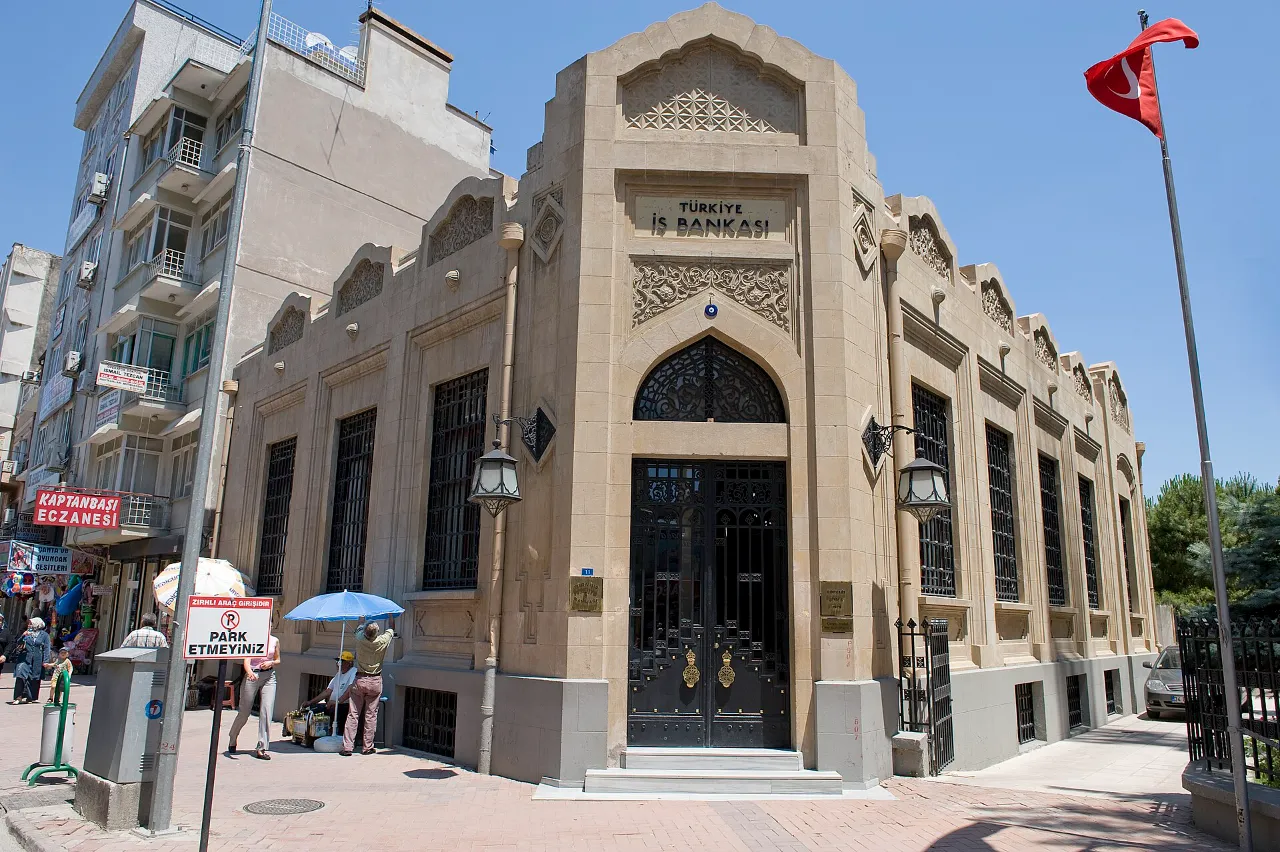

A Turkish bank account is one of the first practical things most foreigners need, whether they are buying a home, paying utility bills on a holiday flat, receiving rent or settling in for good. Foreigners can open accounts in Türkiye, often without a residence permit, but requirements vary from bank to bank and even from branch to branch, and anti-money-laundering checks have become noticeably stricter. This guide explains the documents you need in 2026, how residents and visitors are treated differently, foreign-currency accounts, the foreign exchange purchase certificate used for citizenship purchases, transfers, online banking and the problems people most often run into.
- The tax number comes first
- Documents banks ask for
- Residents versus tourists
- Which banks to try
- Lira and foreign-currency accounts
- Foreign exchange purchase certificate for property and citizenship
- The new secure payment system for title deeds
- Sending money to and from Türkiye
- Online banking, phones and cards
- Common problems and how to avoid them
- Frequently asked questions
The tax number comes first
Every Turkish bank will ask for a Turkish identification number. If you hold a residence or work permit, you already have one: the foreigner identity number (yabancı kimlik numarası) printed on your permit card, which starts with 99 and also serves as your tax number.
If you do not have residence, you need a tax identification number (vergi kimlik numarası) from the Revenue Administration (GİB). You can get one in person at any tax office by showing your passport, and it is usually issued on the spot. GİB also runs an online "potential tax number application for foreigners" on its digital tax office (dijital.gib.gov.tr). The number is free and does not, by itself, create any tax liability.
Keep a copy of the printout or confirmation: you will need the same number for the title deed office, utility contracts and, if you buy a car, the notary.
Documents banks ask for
The core list is short. İşbank’s page for foreign customers, for example, asks for:
– a valid passport (or a valid residence permit, if you have one); – a foreigner identity number or tax identification number; – proof of an address in Türkiye, such as an electricity, water, gas or phone bill in your name issued within the last three months, or in some cases the address shown in your passport.
In practice, expect to be asked for more:
– a Turkish mobile phone number, which is needed for SMS passwords and mobile banking; – an address in Türkiye for official notifications – a rental contract, title deed or residence registration often works; – information on your occupation, income and the expected source of the money you will pay in; – sometimes a document from your home country, such as a bank statement, payslip or pension letter.
Under Turkish anti-money-laundering rules overseen by MASAK, the financial crimes investigation board, banks must identify you and understand why you want the account. A clear answer – "I am buying a flat in Fethiye and will pay the price from my UK account" – helps far more than a vague one.
Residents versus tourists
Holding a residence permit makes the process easier. Your foreigner identity number links to Türkiye’s address registration system, you can use e-Devlet (the government portal) and you look less risky to the bank’s compliance team. Our moving to Turkey checklist and our explainer on residence permits through property cover how to get one.
Visitors on a tourist visa or visa-free stay can still open accounts at many banks with a passport and tax number, and property buyers do so every week. However, a bank is never obliged to accept you. Some branches decline non-residents, ask for a Turkish address you do not yet have, or offer only a basic account. If one branch says no, try another branch of the same bank or a different bank; branches in Fethiye, Antalya, Alanya, Bodrum and Istanbul that see many foreign clients tend to be more used to the paperwork.
Citizens of some countries face extra sanctions screening, and the bank may ask for more documents or refuse. This is a compliance decision rather than a legal ban, and an explanation is rarely given.
Which banks to try
Türkiye’s large banks all serve foreign customers to some degree. They include the state-owned Ziraat Bankası, VakıfBank and Halkbank; private banks such as İşbank, Garanti BBVA, Akbank and Yapı Kredi; foreign-owned banks such as QNB and DenizBank; and participation (Islamic) banks such as Kuveyt Türk. İşbank, for instance, runs dedicated "expat banking" branches and English-language pages for foreign customers.
Rather than looking for a "best" bank, consider:
– whether there is a branch near your Turkish home, since some tasks still need a visit; – whether the mobile app works fully in English; – the fees for incoming and outgoing SWIFT transfers and for card use abroad; – whether staff at your local branch are used to foreign customers.
Banks change their acceptance policies for non-residents without notice, so treat any online list of "banks that accept foreigners" as a starting point only.
Lira and foreign-currency accounts
You can hold a Turkish lira (TRY) current account plus foreign-currency accounts in euros, US dollars, pounds sterling and other currencies, usually under one customer number. Many foreigners keep savings in their home currency and convert to lira only when needed, because the lira has lost value over time. Lira deposits pay much higher interest than foreign-currency deposits, reflecting that inflation, and interest is subject to withholding tax.
Points to know:
– Buying foreign currency from a Turkish bank carries a small transaction tax and the bank’s exchange spread, so compare the rate before converting large sums. – Deposits are protected by the Savings Deposit Insurance Fund (TMSF) up to a set lira limit per person per bank; check the current limit if you hold large balances. – Withdrawing foreign currency in cash may need notice for larger amounts.
Foreign exchange purchase certificate for property and citizenship
If you are buying property to apply for Turkish citizenship by investment, how you move your money matters as much as how much you pay. The minimum is 400,000 US dollars or its equivalent in foreign currency, and since 2022 the amount must be set in foreign currency. The money is brought in as foreign currency, sold to a bank operating in Türkiye and converted into lira, and the bank issues a foreign exchange purchase certificate (döviz alım belgesi, often shortened to DAB). This certificate must be presented before the title deed transfer, and a three-year no-sale annotation is placed on the deed.
In practice, this means:
– send the money by bank transfer in foreign currency to a Turkish bank account, rather than converting it abroad or through an app that pays out in lira; – tell the bank before the money arrives that you need a DAB for a citizenship purchase; – make sure the amounts, dates and names match the sales contract and the valuation report.
Fixing a missing certificate after the money has been converted may not be possible, so agree the process with your bank and lawyer before you send the funds. Our citizenship by property explainer explains the full process.
The new secure payment system for title deeds
Türkiye is introducing a compulsory secure payment system for property sales, which links your bank account directly to the title deed transfer. According to the Ministry of Trade’s amended Regulation on Real Estate Trade, the system becomes mandatory on 1 December 2026, after earlier postponements, and the ministry can delay it by up to three more months. The buyer pays the price into a blocked account using a reference number started through e-Devlet; the money is released to the seller only after the title transfer is approved, and refunded if the sale falls through. A usage fee is deducted from the seller’s payment. With a mortgage, only the part not financed by the loan goes through the system. Read our report on the secure payment system postponement for details.
For foreign buyers, this makes it even more important to have a working Turkish account – and e-Devlet access – well before completion day. Our guide to buying property in Turkey as a foreigner and the explainer on buying costs and title-deed fees set out the rest of the process.
Sending money to and from Türkiye
Turkish accounts use a 26-character IBAN starting with TR. International transfers arrive by SWIFT; your bank will need its SWIFT/BIC code and your full name exactly as on your passport. Expect fees from the sending bank, any intermediary bank and sometimes the receiving bank.
Money transfer services such as Wise, which can pay out in lira at close to the mid-market rate, are popular for regular sums such as living costs or bills. They are less suitable when you need a documented foreign-currency inflow, for example for a citizenship DAB or when a bank asks for proof that the purchase money came from abroad.
Within Türkiye, transfers between banks are made by EFT, and smaller amounts move instantly through the central bank’s FAST system, which can also use a phone number or e-mail as an alias.
Transfer checks are also tightening. Under new MASAK rules phased in during 2026, banks increasingly ask you to choose a purpose category for larger transfers – for example "property purchase" – and may request supporting documents such as a sales contract for very large amounts; the exact thresholds have been revised more than once, so ask your bank. Keep your contract, title deed and invoices handy so that transfers are not held up.
Online banking, phones and cards
Turkish mobile banking apps are excellent, but they depend on a Turkish SIM card to receive one-time passwords. A phone bought abroad and used with a Turkish SIM must be registered (the IMEI registration) after a limited period, otherwise it is blocked on Turkish networks, and registration carries a fee. Many expats keep a cheap local handset for banking.
You will usually receive a debit card on the spot or within days. Credit cards are harder to get as a non-resident because banks want income history in Türkiye; some offer a card secured against a deposit. Turkish cards run on Visa, Mastercard or the domestic Troy network.
Common problems and how to avoid them
– No Turkish address: arrange your rental contract or title deed first, or ask whether the branch accepts your passport address. – Name mismatches: your name must be spelt the same on your passport, tax number and bank records, including middle names. – Accounts frozen for review: unusual transfers can trigger compliance checks. Answer promptly and provide documents. – Dormant accounts: leaving an account unused for years can lead to fees or closure; log in occasionally. – Blocked app: changing your phone or SIM abroad may lock mobile banking until you visit a branch.
If you are relocating to the coast, our guide to living in Fethiye covers local services, and the cost of living guide helps with budgeting. Our free property guide includes a banking checklist for buyers.
Frequently asked questions
Q: Can I open a Turkish bank account as a tourist?
A: Often yes, with a passport and a Turkish tax number, though acceptance depends on the bank’s policy and the branch. A residence permit makes it easier.
Q: How do I get a Turkish tax number?
A: Take your passport to any tax office, where it is usually issued the same day, or use GİB’s online application for foreigners. It is free.
Q: Do I need a Turkish phone number?
A: In practice yes, because SMS passwords and mobile banking depend on it. Register a foreign handset’s IMEI if you use it with a Turkish SIM.
Q: Can I pay for a property with money sent through a transfer app?
A: For an ordinary purchase this may be possible, but for citizenship by investment you need a foreign-currency transfer converted by a Turkish bank with a foreign exchange purchase certificate. Ask your bank and lawyer first.
Q: How does the secure payment system affect my account?
A: From 1 December 2026, the purchase price will go into a blocked account linked to the title deed transfer and be released to the seller only after completion, so buyers need a working account and e-Devlet access in advance.
This guide is general information and not legal, tax or financial advice; bank policies change, so check with your bank, a Turkish lawyer or an accountant before acting.
Sources
- Become our customer – documents for foreign customers (İşbank)
- Yabancılar İçin Potansiyel Vergi Kimlik Numarası Başvurusu (Gelir İdaresi Başkanlığı)
- Yabancıların Türkiye’de banka hesabı açma şartları 2026 (FFK Partner Hukuk)
- Türk vatandaşlığına geçiş şartlarında ‘döviz’ değişikliği (Diken, 2022)
- 400.000 Dolara Gayrimenkul Alarak Türk Vatandaşlığı (Harbiye Hukuk)
- Para transferlerine sıkı denetim geliyor – MASAK tebliği (NTV)
- Limitler sil baştan değişiyor: Bankadan para transferinde yeni şart (Milliyet)
- Secure payment system for property sales postponed to December 1 (Turkey Daily News)
Photo: Dosseman / CC BY-SA 4.0, via Wikimedia Commons