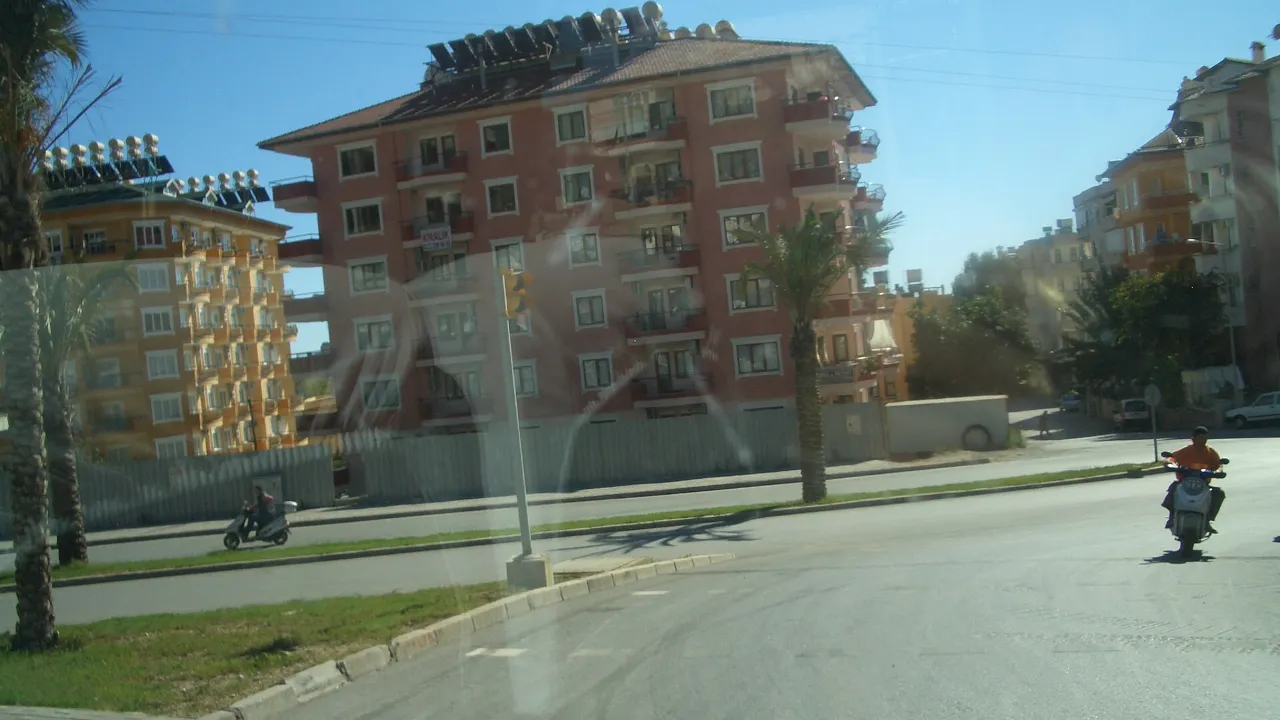

Every home, shop, plot and field in Türkiye is subject to an annual property tax, emlak vergisi, paid to the municipality where the property lies. Foreign owners pay it on the same terms as Turkish citizens, whether or not they live in the country. The second instalment for 2026 is due by Monday 30 November 2026. This guide covers who pays, the rates, how the tax value is set after the 2025 law change, how to pay online, the exemptions, the late-payment surcharge and what happens when you sell.
- Who pays emlak vergisi
- Rates for 2026
- How the tax value is set, and the 2025-2026 changes
- Worked example
- Declaration: only when something changes
- Payment dates for 2026
- How to pay online
- Exemptions and the zero rate
- Değerli konut vergisi: the high-value homes tax
- Late payment: gecikme zammı
- Selling a property: clear the tax first
- Frequently asked questions
Key points
- Who pays: the owner (or the usufruct holder, if there is one). A new owner becomes liable from the year after the purchase. The seller pays for the year of sale.
- Rates: homes 0.1%, other buildings 0.2%, building plots (arsa) 0.3% and farmland (arazi) 0.1% of the tax value. Within metropolitan municipality boundaries all rates are doubled, so a home is taxed at 0.2%.
- Tax value: the value set by the municipality (emlak vergi değeri), not the market price. Under Law 7566, the 2026 value could not exceed the 2025 value plus twice that amount. From 2027 it rises each year by the revaluation rate, which is 27.83% for 2027.
- Deadlines: two equal instalments. The first for 2026 was due by 1 June 2026 and the second is due by 30 November 2026.
- Late payment: a surcharge (gecikme zammı) of 3.7% a month.
- High-value homes: the separate değerli konut vergisi applies only to homes whose building tax value is above 17,711,000 lira (2026). It has no nationality test.
- Exemption: the zero rate for a single home of up to 200 m² covers pensioners of Turkish social security funds; if your pension comes from abroad, ask your municipality whether you qualify.
*This is general information, not legal or financial advice; check your own case with an accountant or your municipality.*
Who pays emlak vergisi
Law 1319 on Property Tax (Emlak Vergisi Kanunu) taxes buildings and land within Türkiye’s borders. The taxpayer is the owner or, where one exists, the usufruct holder (intifa hakkı sahibi). If neither exists, the taxpayer is whoever uses the property as an owner. Co-owners pay in proportion to their shares. The law does not distinguish between Turkish and foreign owners, or between residents and non-residents.
Liability follows the calendar year. Under the Dünya newspaper’s summary of the rules, the obligation starts in the year after the property is bought, and the previous owner remains responsible for the year of sale. In practice this means the owner at the start of the year pays for that whole year.
Rates for 2026
The tax is the rate multiplied by the property’s tax value. The rates, in force for 2026, are:
- Home (konut): 0.1% (binde 1); 0.2% (binde 2) in metropolitan municipalities (büyükşehir)
- Other buildings, e.g. shops and offices: 0.2%; 0.4% in metropolitan municipalities
- Building plot (arsa): 0.3%; 0.6% in metropolitan municipalities
- Farmland (arazi): 0.1%; 0.2% in metropolitan municipalities
The doubled rates apply within metropolitan municipality boundaries and adjacent areas (mücavir alan). Your bill or the municipality’s online record shows which rate applies to your property.
How the tax value is set, and the 2025-2026 changes
The tax value is not your purchase price or a valuation report. Municipal commissions set minimum unit values for land per square metre, and building values are calculated from official construction cost tables, the building’s floor area and its share of the land. The municipality calls the result the emlak vergi değeri; you will also hear it called the rayiç değer.
New unit values were set in 2025 for 2026 onwards, and in many areas they were several times higher than before. Parliament responded with Law 7566, published in the Official Gazette on 19 December 2025:
- 2026 cap: the 2026 tax value of a building or land cannot exceed the 2025 value "by more than two times" (iki kat fazlası). The Finance Ministry’s Property Tax Communiqué No. 89 of 31 December 2025 applies this as the 2025 value plus twice that amount. In its example, a plot valued at 900,000 lira in 2025 and recalculated at 6,000,000 lira for 2026 is capped at 2,700,000 lira. Some press reports described the cap as "double" the 2025 value, but the communiqué’s examples use three times.
- 2027 to 2029: values increase each year by the full revaluation rate (yeniden değerleme oranı). Before Law 7566 only half the rate applied. The 2027 revaluation rate was announced on 3 November 2026 at 27.83%.
- Other charges: the capped values are also used for title deed fees and other charges based on the property tax value.
Communiqué No. 89 also notes that when the recalculated value is below the cap, the new value applies without adjustment. Not every owner’s value rose by the maximum amount.
Worked example
Communiqué No. 89 includes an example of a 150 m² home. Its 2025 tax value was 988,000 lira and its recalculated 2026 value was 1,429,000 lira. That is below the cap of 2,964,000 lira, so 1,429,000 lira applies.
- Metropolitan municipality: 1,429,000 × 0.2% = 2,858 lira a year, or 1,429 lira per instalment.
- Other municipality: 1,429,000 × 0.1% = 1,429 lira a year.
Your own bill depends on your property’s value, so check the figure the municipality holds for you.
Declaration: only when something changes
You do not file a property tax return every year. Under Law 1319, a declaration (beyan or bildirim) is needed only when something changes, such as buying a property, finishing a building, or splitting or changing the use of land. It must be submitted within the budget year in which the change happens. After that the municipality assesses the tax every year without a new declaration.
If you buy, the land registry notifies the municipality of the sale by the 15th of the following month. It is still sensible to check with the municipality’s property tax office (emlak servisi) that a record exists in your name. Many municipalities offer an "Emlak Vergisi Bildirimi" service on e-Devlet. You can also get a barcoded statement of your property’s tax value (Emlak Vergisi Bildirim Sureti (Rayiç Bedel) Belgesi) there.
Payment dates for 2026
The tax is paid in two equal instalments: the first in March, April and May, and the second in November.
- First instalment 2026: due by 1 June 2026, because 31 May fell on a Sunday.
- Second instalment 2026: 1 to 30 November 2026. The deadline is Monday 30 November 2026.
How to pay online
- e-Devlet (turkiye.gov.tr): search for your municipality’s name. Most municipalities list a service called "[Municipality] Belediyesi/Borç İşlemleri" where you can see and pay property tax debts by card. You need an e-Devlet password. See our e-Devlet password guide for foreigners.
- Municipality websites (e-belediye): most municipalities have an online debt inquiry and card payment page.
- Cashier offices and banks: you can pay at the municipality’s cashier desk (vezne) or through banks that have an agreement with the municipality.
Have your foreigner identity number or Turkish tax number and your title deed details ready, as the municipality uses them to find your record. If you live abroad, a local representative can pay at the cashier desk for you.
Exemptions and the zero rate
Law 1319 allows a zero rate on a single home in Türkiye with a gross area of no more than 200 m² for the following groups:
- people who document that they have no income;
- people whose only income is a pension or survivor’s pension from Turkish social security institutions;
- disabled people;
- veterans;
- widows and orphans of martyrs.
You must apply to the municipality with documents. The benefit does not need to be renewed every year, but you must tell the municipality if your situation changes.
Foreign owners: the retiree zero rate is written for pensions from Turkish social security institutions, and owning two homes rules it out. If your pension comes from another country, or you believe you fall into one of the other groups, ask your municipality in writing before relying on the exemption.
Değerli konut vergisi: the high-value homes tax
This is a separate national tax, filed with the Revenue Administration (GİB) rather than the municipality.
- 2026 threshold: it applies only to homes whose building tax value exceeds 17,711,000 lira (Property Tax Communiqué No. 88). The test uses the tax value, not the market price.
- Rates (2026):
- 0.3% on the part between 17,711,000 and 26,567,000 lira;
- 0.6% on the part up to 35,425,000 lira;
- 1% above 35,425,000 lira.
- Exemptions: an owner whose only home in Türkiye is above the threshold is exempt. An owner of several high-value homes is exempt on the one with the lowest value.
- Filing and payment: the 2026 return was due through the Internet Tax Office by 20 February 2026. The tax is paid in two instalments, in February and August.
- Foreigners: the law contains no nationality test, so foreign owners of two or more qualifying homes are liable like anyone else.
The official 2027 threshold had not been published at the time of writing.
Late payment: gecikme zammı
If you miss a deadline, the unpaid tax attracts a late-payment surcharge under the collection law (Law 6183). The surcharge has been 3.7% a month since a presidential decision of 13 November 2025. Pay before 30 November, or pay as soon as possible if you have missed it.
Selling a property: clear the tax first
- Who pays for the year of sale: the seller is responsible for the year of sale and the buyer from the next year.
- Joint liability: under Article 30 of Law 1319, the seller and the buyer are jointly liable for unpaid property tax for the year of transfer and earlier years. The buyer can claim it back from the seller.
- Title deed fee: the property tax value also matters at the land registry. A Revenue Administration ruling confirms that the title deed fee (tapu harcı) is calculated on the declared price, which cannot be lower than the property’s emlak vergi değeri.
For buyers, it is sensible to ask the seller for proof that all property tax has been paid, and to include a clause in the contract that makes the seller responsible for earlier debts. Sellers should pay the full year’s tax before the appointment. See our guides to selling property in Türkiye and capital gains tax and the costs of buying a home and the title deed fee. If you let your property, property tax is separate from income tax on rent. Our guide to short-term and long-term renting and rental tax covers that.
Frequently asked questions
Q: Do foreigners pay property tax in Türkiye?
A: Yes. Emlak vergisi applies to all buildings and land in Türkiye, and the owner pays at the same rates whatever their nationality or residence.
Q: When is the 2026 property tax deadline?
A: The second instalment is due by Monday 30 November 2026. The first instalment was due by 1 June 2026.
Q: How much is property tax on a home in Türkiye?
A: 0.1% of the tax value a year, or 0.2% within a metropolitan municipality. The tax value is set by the municipality and is usually below the market price.
Q: I am a retired foreigner with one flat under 200 m². Am I exempt?
A: The zero rate is written for pensions from Turkish social security institutions, so a foreign pension is unlikely to qualify on its own. Ask your municipality in writing before relying on it.
Q: What happens if I pay late?
A: A late-payment surcharge of 3.7% a month is added to the unpaid tax. The debt also passes jointly to a buyer if you sell, so it is best to clear it before selling.
Q: Do I have to file a property tax return every year?
A: No. You declare only when something changes, such as a purchase or a new building, within the same year. After that the municipality bills you every year.
Planning to buy a home in Türkiye? Download our free property guide for a step-by-step checklist.
Sources
- Law 7566, Official Gazette 19 December 2025, No. 33112 (Resmî Gazete)
- KPMG Türkiye: Law 7566 published, RG 19.12.2025/33112; Article 10 amends EVK provisional art. 23 (2026 cap), 2027-2029 values rise by revaluation rate
- PwC Türkiye: Law 7566 tax provisions – EVK art. 29 now full revaluation rate (was half); 2026 cap
- Emlak Vergisi Kanunu Genel Tebliği Seri No 89 (RG 31.12.2025, 33124 5th rep.): cap = 2025 value + 2x; Example 1 (900,000 -> 2,700,000), Example 7 (home 988,000 -> 1,429,000, cap 2,964,000); value calculation method (Alomaliye copy)
- Emlak Vergisi Kanunu Genel Tebliği Seri No 89 text, geçici 23 wording ‘iki kat fazlasını geçemez’ (Lexpera)
- Law 1319 Emlak Vergisi Kanunu, Arts 1, 3 (taxpayer: owner/usufruct holder, co-owners by share), 4 (Alomaliye consolidated text)
- PwC Türkiye: 2026 emlak vergisi rates – konut 1‰/2‰, işyeri 2‰/4‰, arsa 3‰/6‰, arazi 1‰/2‰ (normal / büyükşehir and mücavir alan), 18 Feb 2026
- Emlak vergisi beyan ve ödeme dönemi: rates, 100% increase in büyükşehir/mücavir alan, two instalments March-May and November, 200 m² single-home reduced rate groups (Alomaliye)
- NTV: 2027 construction cost tables; rates 1/2/3/1 per mille, doubled in metropolitan municipalities (6 Aug 2026)
- Dünya: 2026 property tax – first instalment deadline 1 June 2026, 3.7% monthly late interest, liability starts year after purchase, seller liable in year of sale, 200 m² exemption
- Ekonomist: 2026 second instalment deadline Monday 30 November 2026; payment at municipal cashiers, websites, e-Devlet (2 Nov 2026)
- A Haber: second instalment 1-30 November 2026; 3.7% monthly late interest; payment via municipality, e-Devlet, contracted banks (27 Oct 2026)
- İşçi Haber: 2026 second instalment 30 November 2026, 3.7% monthly late interest, full revaluation rate 2027-2029 (27 Oct 2026)
- Bloomberg HT: gecikme zammı cut from 4.5% to 3.7% a month, presidential decision 13 Nov 2025
- Bloomberg HT: 2027 revaluation rate 27.83% (3 Nov 2026)
- Emlak Vergisi Kanunu Genel Tebliği Seri No 88 (RG 31.12.2025): 2026 değerli konut threshold 17,711,000 TL and brackets (Alomaliye)
- Değerli konut vergisi 2026: base is bina vergi değeri; single-home and lowest-value-home exemptions; declaration by 20 Feb, payment February and August (Alomaliye)
- GİB announcement: değerli konut return via Internet Tax Office by 20/02/2026, two instalments February and August (Alomaliye copy, source GİB)
- Hukukçular Evi: Law 1319 taxpayer rules, declaration within the budget year of the change, zero-rate groups, notifying changes
- Law 1319 Art. 30: instalments; seller and buyer jointly liable for unpaid tax of transfer year and earlier; land registry notifies municipality by 15th of following month (older consolidated text)
- Muhasebe News: Art. 30 joint liability of transferor and transferee; buyer’s right of recourse; check debts and contract clause
- GİB tax ruling (Sivas Defterdarlığı, 03.07.2023): title deed fee base cannot be lower than emlak vergisi value
- e-Devlet: municipal ‘Borç İşlemleri’ services for debt inquiry and payment
- e-Devlet emlak vergisi services: Emlak Vergisi Bildirimi, Bildirim Sureti (Rayiç Bedel) Belgesi (e-Yaşam Rehberi, updated 7 Oct 2026)
Photo: Руслан Селезнёв / CC BY 3.0, via Wikimedia Commons