
Türkiye's industrial production declined 1.9% year on year in August, deepening a slowdown in the country's factory sector, according to data released by the Turkish Statistical Institute (TurkStat) on October 9.
The annual contraction followed a 0.2% drop in July. On a monthly basis, output fell 1% in August after a 0.9% decline the previous month, marking another month of shrinking activity.
Manufacturing drags
Manufacturing, which accounts for the bulk of industrial output and much of Türkiye's export base, was the weakest component. Manufacturing production fell 2.5% from a year earlier and 1.6% from July.
Other segments held up better. Mining and quarrying output rose 1.7% year on year and 4.1% month on month, while electricity, gas, steam and air conditioning supply increased 1.3% annually and 3.3% from the previous month.
Mixed signals for the economy
The weak industrial figures contrast with a strong headline export performance. Goods exports jumped 15.4% to a record $26 billion in September, according to the Trade Ministry, though that data covers a later month and is measured in US dollar terms rather than volume.
Domestic demand indicators are also mixed. Separate TurkStat data showed retail sales volume up 10.1% year on year in August, while sales of motor vehicles fell sharply. Figures from the Automotive Manufacturers Association (OSD) show vehicle output down 5.9% in the first nine months of 2026, with passenger car production off 17%.
Turkish manufacturers have been dealing with tight financial conditions as the central bank keeps borrowing costs high to tame inflation, which slipped below 30% in September. Higher energy costs linked to the war in the region have added to input prices. The government's Medium-Term Program, published in September, lowered its 2026 growth forecast to 3.3% from 3.8%.
Industrial production is closely watched as an early indicator of gross domestic product, and the weakness in July and August suggests third-quarter growth may be subdued.
Sources
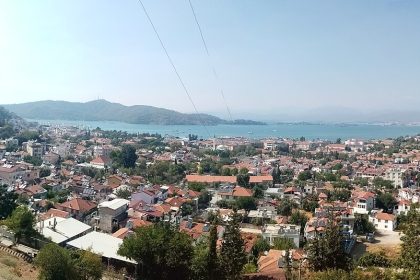
Photo: Kadı Kadı / CC BY-SA 2.0, via Wikimedia Commons