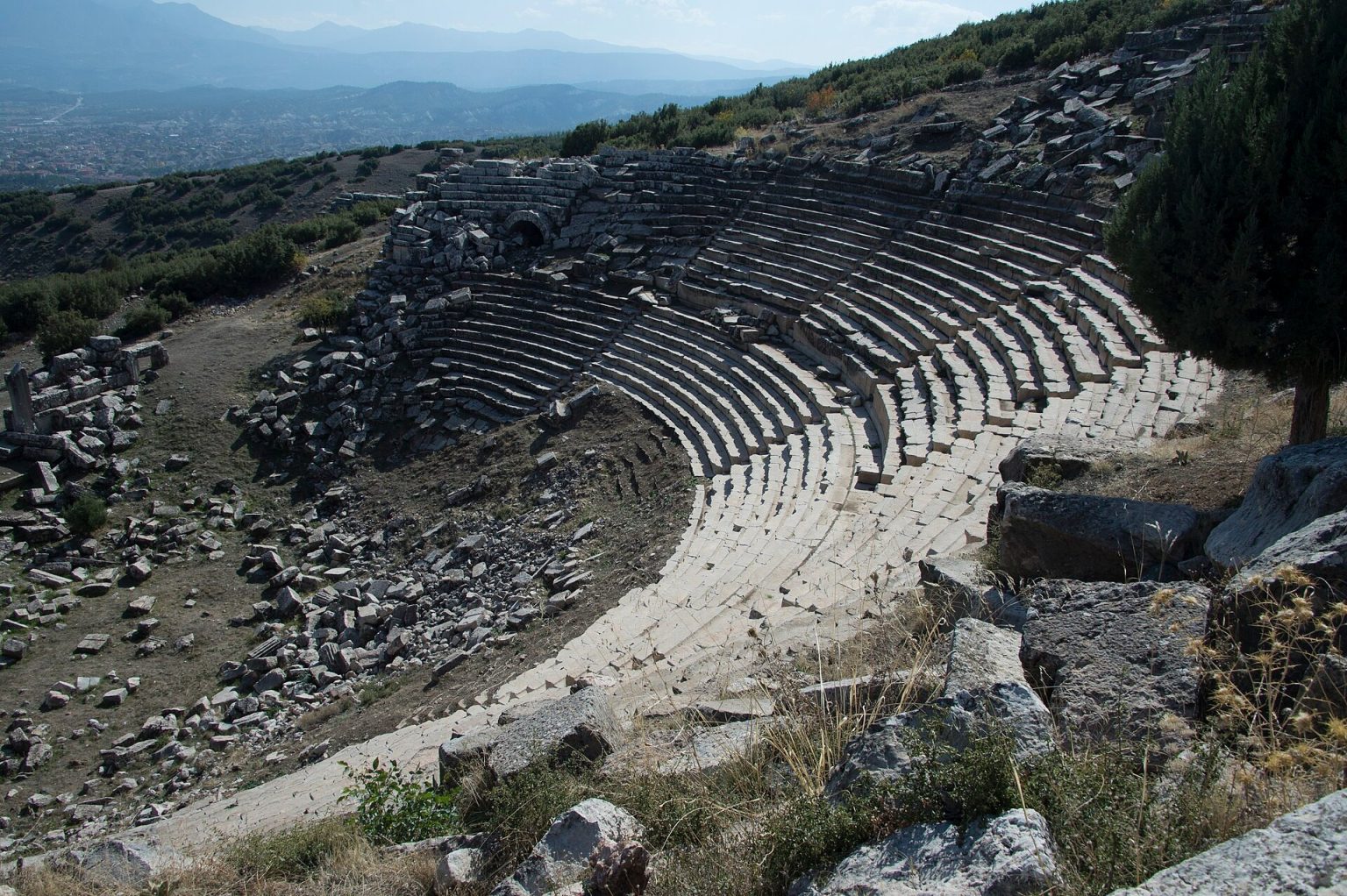

A stone block inscribed on all four faces with a complete knucklebone oracle has been identified at the ancient city of Kibyra in Burdur province, southwestern Türkiye, according to a study reported by archaeology news site Arkeofili on Oct. 13.
The limestone block, which came from the third terrace of the city’s ancient agora, was found in 2024 inside a chapel, where it had been reused as part of a wall. Researchers believe that reuse helped preserve the inscription.
Fortune told with five bones
The text relates to astragalomancy, a form of divination using knucklebones of sheep, goats or calves. Each bone has four sides, given the values 1, 3, 4 or 6. In a common version of the practice, a person threw five bones at once, added up the numbers and looked up the total on the stone to read the matching answer.
The Kibyra block lists 56 possible outcomes, each with its own message. Some encourage the enquirer to act, others counsel patience and some warn against a particular course. The questions they address include travel, trade, money, illness and disputes.
Hermes, the god associated with trade, profit and lots, plays a central role in the text, while Zeus, Athena, Apollo and Asklepios are also named. A larger inscription on one face records that a benefactor paid from his own funds for the stone, a statue of Hermes, its pedestal and other parts of the monument.
Parallels across southern Asia Minor
The practice dates to the Roman period. The closest parallel is an oracle inscription from Kremna, and texts from Termessos, Ormeleis and Adada show strong links as well. Unlike some of those examples, parts of which are lost, the Kibyra text preserves all of the outcomes. Differences in wording between the versions may come from copying errors or local variation, the researchers suggest.
The findings were published by Şenkal Kileci, Nihal Tüner Önen and Şükrü Özüdoğru in volume 31 of the journal Gephyra under the title "A New Astragalos Oracle Text from Kibyra: A Comparative Study with Southern Asia Minor Parallels."
Sources
Photo: Dosseman / CC BY-SA 4.0, via Wikimedia Commons