
Hospital emergency departments in Türkiye are seeing more patients with respiratory infections as autumn sets in. Specialists say this does not on its own mean that the influenza season has started early, Hürriyet reported on Monday.
Emergency medicine specialist Assoc. Prof. Süleyman Alpar told the newspaper that colder weather, more time spent indoors, the reopening of schools, changes in population immunity and changes in the viruses themselves all affect how infections spread. He warned against treating every respiratory infection as flu. The real picture for Türkiye, he said, will come from the Ministry of Health’s weekly surveillance reports.
The rise follows similar signs in Istanbul, where officials recently reported about 559,000 hospital visits for respiratory infections in a month.
Three flu strains, similar symptoms
The influenza viruses now in circulation are A(H1N1)pdm09, A(H3N2) and B/Victoria. Alpar said Victoria is a long-known influenza B lineage, not a new disease. This season’s vaccine has three components instead of four. The B/Yamagata lineage it used to cover has not been confirmed in natural circulation since March 2020.
All three strains cause much the same symptoms: sudden fever, chills, headache, muscle and joint pain, weakness, dry cough and sore throat. They cannot be told apart by symptoms alone. Laboratory PCR testing, with subtyping where needed, is required to tell them apart, according to Dr. Onur Taşçı, who was also cited in the report.
Risks differ by group. H3N2 can be severe in older adults. In some seasons, H1N1 hits young adults and pregnant women harder, and influenza B can be serious in children. The specialists said no fixed ranking of severity applies to every season. They also noted that someone can catch a different flu subtype in the same season, because an earlier infection or vaccination gives only partial cross-protection.
Globally, flu activity is still low, but H1N1’s share of detected viruses is rising. Alpar stressed that this is not a forecast for Türkiye, where laboratory data are needed.
When to get vaccinated
The specialists said October and November are the best months for the flu jab, because protection takes about two weeks to build. The vaccine does not give 100% protection. Its main value is in cutting the risk of serious illness.
Hürriyet cited observational studies from past seasons. Among adults hospitalised with flu, vaccinated patients had about a 26% lower risk of intensive care admission and a 31% lower risk of death than unvaccinated patients. These figures are not efficacy rates for the current season.
What it means for residents
For foreigners living in Türkiye, the specialists’ advice is the same as for everyone else: do not assume every cough is flu, seek a test if symptoms are severe, and consider vaccination in the coming weeks, particularly for older people, pregnant women, children and anyone with a chronic condition. Ask your doctor or family health centre (aile sağlığı merkezi) about the jab, and check what your cover includes: see our guide to health insurance for foreign residents and the moving to Türkiye checklist.
Sources
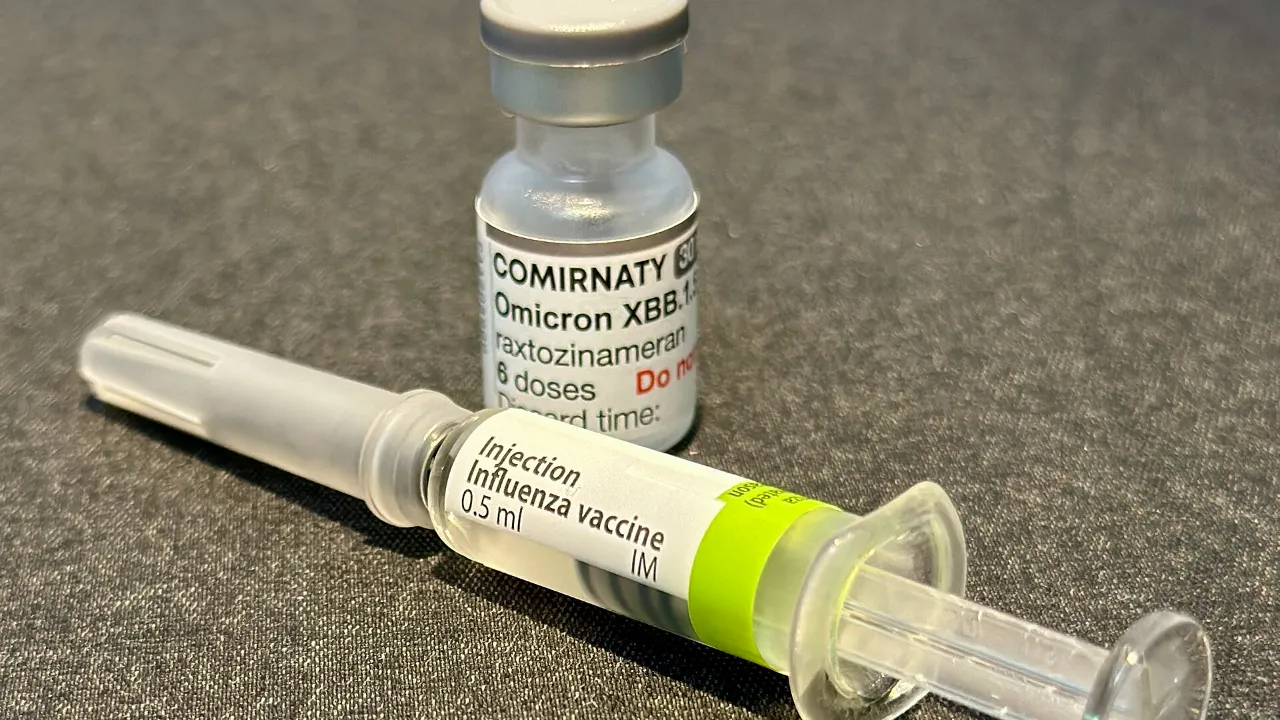
Photo: Whispyhistory / CC BY-SA 4.0, via Wikimedia Commons