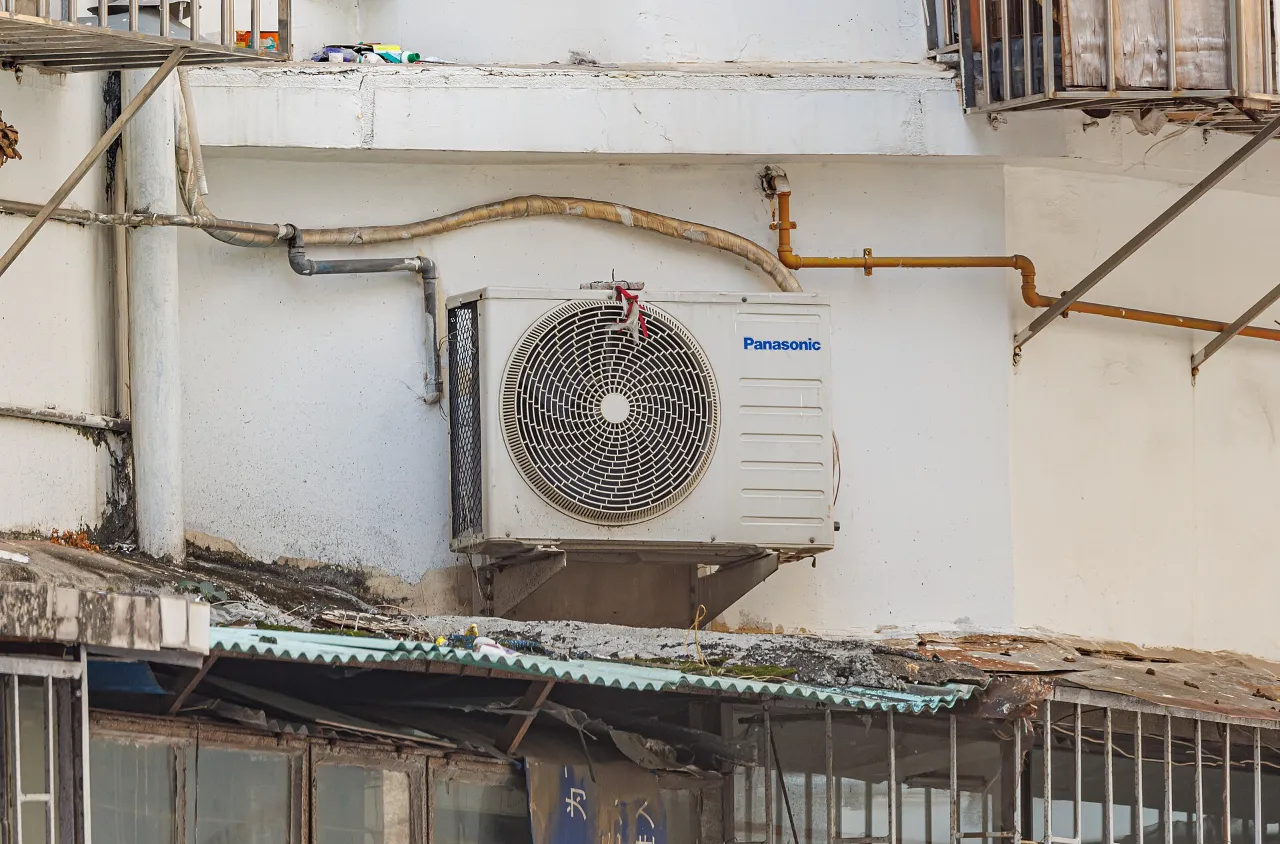

Summers on Türkiye’s coasts are long and hot, and a split air conditioner (klima) is standard in most homes. This guide takes foreign residents and property owners step by step through choosing, installing, servicing and repairing an AC unit, and explains your consumer rights. It reflects the rules as of November 2026.
- Step 1: Choose the right type and size
- Step 2: Read the energy label
- Step 3: Get permission before you drill
- Step 4: Use a certified installer
- Step 5: Find and vet a technician
- Step 6: Service the unit regularly
- Step 7: Diagnose common faults
- Step 8: Know your warranty and repair rights
- Step 9: Heating with AC and running costs
- Useful Turkish phrases
- Frequently asked questions
Key points
- Size the unit to the room. A bigger unit is not automatically better.
- Compare the energy label: seasonal cooling efficiency (SEER) and, for heat-pump units, seasonal heating efficiency (SCOP).
- In an apartment building, an outdoor unit on the facade or in a common area can need the other owners’ consent. Ask your building manager (yönetici) first.
- Installation and servicing of the refrigerant circuit must be done by people holding an F-gas professional qualification certificate.
- New appliances have a warranty of at least two years. A repair under warranty should take no more than 20 working days.
This is general information, not legal or technical advice.
Step 1: Choose the right type and size
Most homes use a wall-mounted split system: an indoor unit on the wall and an outdoor unit (dış ünite) outside, joined by refrigerant pipes.
Capacity is quoted in BTU. Split units are usually sold in steps such as 9,000, 12,000, 18,000 and 24,000 BTU. There is no official Turkish sizing table, but the US government’s ENERGY STAR programme publishes a widely used rule of thumb. Converted to square metres, it suggests roughly:
- 33 to 37 m²: 9,000 BTU
- 42 to 51 m²: 12,000 BTU
- 65 to 93 m²: 18,000 BTU
- 130 to 139 m²: 24,000 BTU
The same guidance says to reduce capacity by about 10% for a heavily shaded room, increase it by about 10% for a very sunny one, add 600 BTU for each regular occupant beyond two, and add 4,000 BTU if the unit cools a kitchen. It warns that an oversized unit cools the air before removing humidity, leaving the room damp and clammy, and wastes energy. Top-floor flats and rooms with big sunny windows may need more, so ask the installer to see the room (keşif) first.
Inverter or on/off? An inverter unit varies the speed of its compressor to match demand, rather than switching fully on and off. The Energy Efficiency Association (Enerji Verimliliği Derneği) advises users to let inverter units adjust their capacity automatically to the room temperature.
Step 2: Read the energy label
Air conditioners sold in Türkiye carry an energy label under the Communiqué on Energy Labelling of Air Conditioners (Klimaların Enerji Etiketlemesine Dair Tebliğ). Check:
- the energy class;
- SEER, the seasonal cooling efficiency, and SCOP, the seasonal heating efficiency (higher is better);
- annual energy consumption in kWh;
- noise levels for the indoor and outdoor units in dB(A).
On the EU version of this label, the heating figure for an "average" climate is mandatory, while figures for warmer and colder climates are optional, so check which climate figures your label shows.
Step 3: Get permission before you drill
In an apartment building. The Condominium Law (Kat Mülkiyeti Kanunu, No. 634) obliges owners to protect the building’s architectural appearance, and Article 19 requires the written consent of four-fifths of all owners for construction or installations in common areas. The facade is generally treated as a common area. Your building’s management plan (yönetim planı) may also say where outdoor units can go. Before installing, ask the yönetici what the plan says and whether a decision of the owners’ board (kat malikleri kurulu) is needed. Unauthorised units can be ordered removed by a court, and noise or dripping condensate causes neighbour disputes.
If you rent. Get your landlord’s written agreement before drilling walls, and agree who owns the unit when you leave. See our guide to renting a home in Turkey as a foreigner.
Discuss with the installer:
- a solid mounting point that can be serviced safely;
- airflow around the outdoor unit, away from neighbours’ windows;
- a condensate drain that does not drip onto balconies or pavements below;
- a suitable electrical circuit (see our guide to setting up electricity, water and internet in Turkey).
Step 4: Use a certified installer
Türkiye’s Regulation on Fluorinated Greenhouse Gases, issued by the Ministry of Environment, Urbanisation and Climate Change in October 2024, sets the rules for refrigerants used in ACs and heat pumps:
- People who install, commission, service or decommission stationary AC and heat-pump equipment must hold a professional qualification certificate (Mesleki Yeterlilik Belgesi) for that work. These are issued by certification bodies authorised by the Vocational Qualifications Authority (MYK).
- Companies doing this work for third parties need a service competence certificate (Hizmet Yeterlilik Belgesi) from the Turkish Standards Institution (TSE) under standard TS 13905.
- Recovering refrigerant also requires a certified person. Refrigerant should not simply be vented.
- Sellers of equipment that is not hermetically sealed must check that the buyer can install it, or obtain a declaration that a certified person or company will do so.
- From 1 January 2027, single split systems containing less than 3 kg of F-gas with a global warming potential (GWP) of 750 or more may no longer be placed on the market.
Ask to see the certificate and keep the paperwork.
Step 5: Find and vet a technician
Start with the brand’s authorised service. For a new unit, the manufacturer or importer must list its authorised service points (yetkili servis) in the user manual. Using them protects your warranty.
Ask people you trust. Neighbours, your yönetici, your estate agent and local expat groups know who turns up and who does a tidy job. Our guide on how to find a reliable tradesman in Turkey covers general vetting.
Use directories to build a shortlist. Online directories help when you are new to an area. You can browse air conditioning service listings on ilan.com.tr, which group firms by province and district with user reviews. Treat any listing as a starting point, not a recommendation.
Before you agree:
- read recent reviews and ask neighbours about the firm;
- ask for the F-gas certificate;
- get a written quote listing the unit, pipe length, brackets, labour and extras;
- ask whether old units will be removed and the refrigerant recovered;
- ask for an invoice (fatura).
Step 6: Service the unit regularly
The Energy Efficiency Association stresses regular maintenance for efficiency. In practice:
- Clean the indoor filters as often as the manual says; more in dusty or heavy-use periods.
- Have a technician check and clean the unit before the cooling season, and before winter if you heat with it.
- Set a sensible temperature. The association advises not going below 24°C in summer and says each degree can change electricity use by up to about 6%.
Step 7: Diagnose common faults
Check the simple things first:
- Not cooling well: dirty filters, wrong mode, doors or windows open, or an outdoor unit in full sun with blocked airflow. A refrigerant leak needs a certified technician; "topping up" without finding the leak is a short-term fix.
- Water dripping indoors: often a blocked or poorly sloped condensate drain.
- Error code: look it up in the manual before you call.
Step 8: Know your warranty and repair rights
Consumer Protection Law No. 6502 and its regulations set the rules:
- Warranty: at least two years, starting on the day the product is delivered to you.
- Repair time: for goods such as air conditioners, the maximum repair time is 20 working days. Under warranty, it runs from the day you report the fault to the authorised service or the seller.
- If the repair takes too long, the law says you are free to use your other rights: a refund, a price reduction or replacement where possible.
- No charges for shipping or other costs when you choose free repair under warranty, unless the fault came from misuse.
- Service life: the manufacturer or importer must provide after-sales service and spare parts for the product’s set service life, which is 10 years for air conditioners.
- Paperwork: a service station that takes your unit must give you a receipt. Write your chosen remedy on it and get it signed.
If the seller or service will not cooperate, apply to the Consumer Arbitration Committee (Tüketici Hakem Heyeti) online through e-Devlet. In 2026, disputes up to 186,000 lira go there; larger claims go to the consumer court.
Step 9: Heating with AC and running costs
Heat-pump split units can also heat in winter. Check the SCOP figure for heating efficiency, and keep the outdoor unit clear.
There is no special tariff for air conditioning, and costs depend on your unit, your home and your habits. Note that the energy regulator EPDK has cut the subsidised household electricity consumption limit to 3,000 kWh a year from 1 January 2027, down from 4,000 kWh in 2026. Households above it move to a higher-consumption tariff, so heavy AC use in a large home matters more than before.
Useful Turkish phrases
- Klimam soğutmuyor. My air conditioner is not cooling.
- Yazılı fiyat teklifi alabilir miyim? Can I get a written quote?
- F-gaz sertifikanız var mı? Do you have an F-gas certificate?
- Garanti kapsamında mı? Is it covered by the warranty?
Frequently asked questions
Q: Do I need permission to put an AC outdoor unit on my apartment building?
A: Often, yes. The facade is generally a common area, and the Condominium Law requires four-fifths written consent for installations in common areas. Check the management plan and ask your yönetici first.
Q: Can any handyman install a split air conditioner?
A: No. Under the F-gas regulation, people who install or service AC and heat-pump equipment must hold a professional qualification certificate, and firms working for others need a TSE service competence certificate.
Q: How long can a repair under warranty take?
A: For air conditioners the maximum is 20 working days from the day you report the fault. After that, you can ask for a refund, a price reduction or replacement where possible.
Q: What size air conditioner do I need?
A: As a rule of thumb, about 9,000 BTU for 33 to 37 m² and 12,000 BTU for 42 to 51 m², adjusted for sun, shade and occupants. Ask an installer to survey the room.
Planning to buy a home in Türkiye? Download our free property guide for a step-by-step checklist.
Sources
- ENERGY STAR room air conditioner sizing chart and adjustments; oversized units less effective (US EPA/DOE, archived page)
- Enerji Verimliliği Derneği (Ahmet Erdem): compare annual consumption, SEER, SCOP; let inverter units adjust; not below 24°C, ~6% per degree; regular maintenance (Dünya)
- Klimaların Enerji Etiketlemesine Dair Tebliğde Değişiklik Yapılmasına Dair Tebliğ (Energy Ministry efficiency portal)
- Commission Delegated Regulation (EU) No 626/2011, Annex III: label contents (SEER, energy class, kWh/year, sound power); heating seasons, average mandatory, warmer/colder optional, SCOP
- Kat Mülkiyeti Kanunu Art. 19: duty to protect architecture; four-fifths written consent for installations in common areas; klima treated with facade changes (Hukukçular Evi)
- Outdoor AC units in common areas: facade generally common area, management plan rules, noise/condensate disputes, removal orders (FFK Partner Hukuk)
- Florlu Sera Gazlarına İlişkin Yönetmelik (RG 15 Oct 2024), Ministry of Environment, Urbanisation and Climate Change: Art. 14(7)(c) split ban from 1/1/2027 (GWP 750+, under 3 kg), Art. 15(4) seller check, Art. 16 Mesleki Yeterlilik Belgesi (MYK), Art. 17 TSE Hizmet Yeterlilik Belgesi TS 13905 (Alomaliye copy)
- Law 6502 on Consumer Protection, Art. 11: seçimlik haklar; repair within regulation’s maximum repair time, otherwise other rights (Ministry of Trade compilation)
- Satış sonrası hizmetler hakkında bilgilendirme: 20 working days max repair, start date, service life duties, service receipt, no fees in free warranty repair (Ministry of Trade)
- Satış Sonrası Hizmetler Yönetmeliği, Annex: 3.1 Klimalar 10 yıl service life (Ministry of Trade)
- Ministry of Trade consumer FAQ: warranty minimum two years from delivery; remedies if repair time exceeded (Alomaliye copy)
- Consumer Arbitration Committees information note: 186,000 lira limit for 2026, e-Devlet applications (Ministry of Trade)
- EPDK cuts household last-resort supply limit to 3,000 kWh/year from 1 Jan 2027, from 4,000 kWh in 2026; about 6.5 million subscribers (Bloomberg HT)
Photo: Dinkun Chen / CC BY-SA 4.0, via Wikimedia Commons