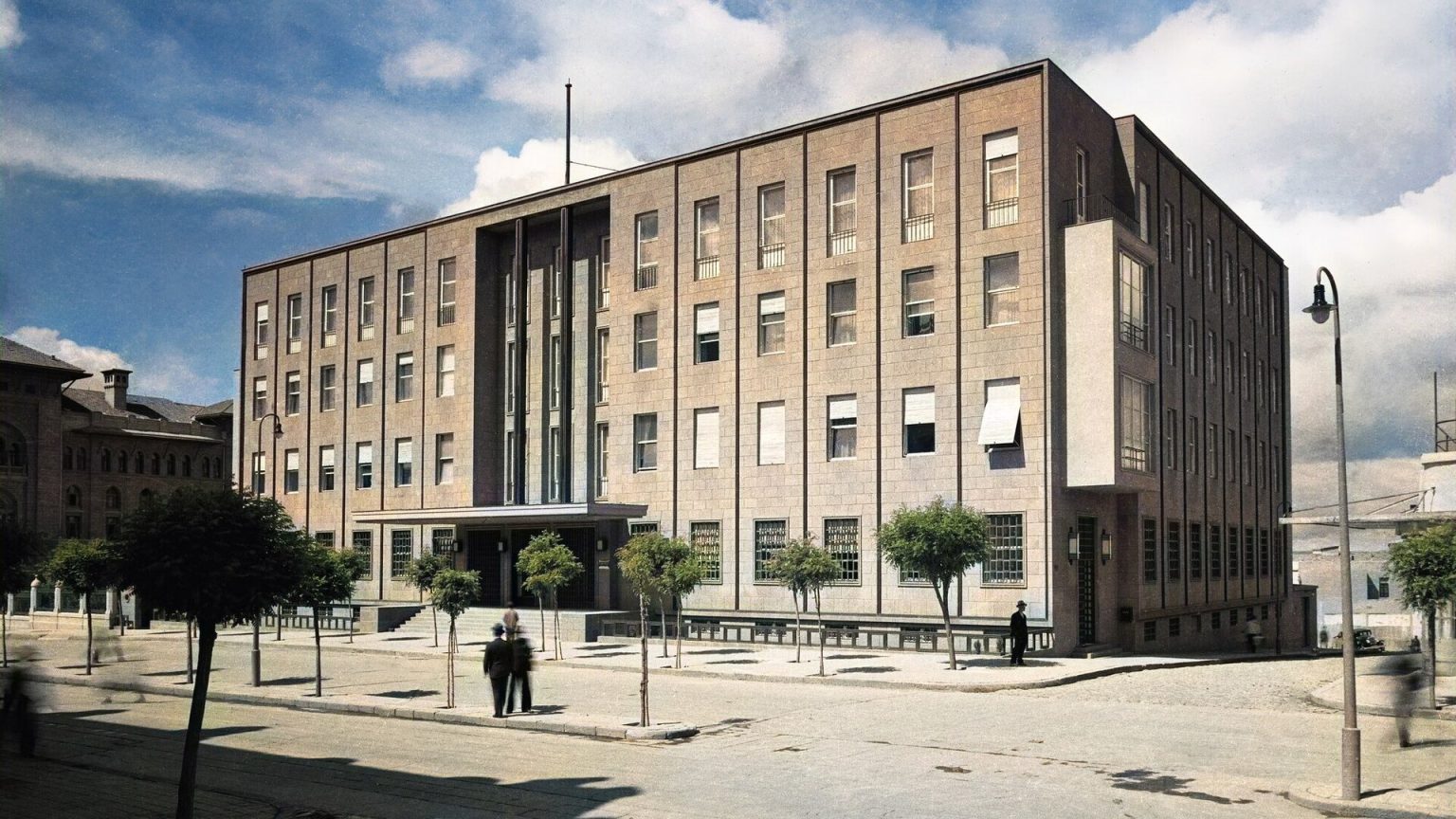

The governor of Türkiye’s central bank, Fatih Karahan, said on Oct. 14 that recent outflows from domestic investment funds had not significantly weakened Turkish residents’ preference for lira-denominated assets, and that monetary policy would remain tight until price stability is achieved.
Karahan made the remarks in a presentation titled "Macroeconomic Outlook and Monetary Policy in Türkiye" on the sidelines of the annual meetings of the International Monetary Fund and World Bank in Bangkok, Thailand, according to Anadolu Agency.
Fund turmoil contained, governor says
Türkiye’s fund industry has been shaken since mid-September, when the Capital Markets Board ordered the liquidation of a number of investment funds run by several portfolio management firms, prompting redemptions and a criminal investigation.
Karahan said proactive steps had limited the risk that problems at funds placed under transaction restrictions would spread to the rest of the financial system. He added that domestic residents’ preference for the Turkish lira was broadly maintaining its strength.
That point matters for the central bank’s strategy. A shift by households and companies out of lira savings and into foreign currency or gold would weaken the currency and add to inflation, as happened repeatedly in past episodes of stress.
Energy prices the main inflation driver
On inflation, Karahan said energy prices had been the main factor this year and that supply-side pressures had slowed the pace of disinflation. Even so, he said the underlying trend had eased despite higher energy costs, helped by weak demand.
Disinflation was continuing in services, he said, with slower increases in rent and education partly offset by faster rises in transport and communication prices. Demand conditions were also supporting a slowdown in core goods prices.
Annual consumer inflation in Türkiye stood at 29.73% in September, according to the statistics office.
Karahan reiterated that the Monetary Policy Committee would set the policy rate by looking at realized and expected inflation as well as the underlying trend, in line with its interim targets. The rate currently stands at 37%, and the next decision is due on Oct. 22. In a Matriks survey published on Oct. 13, 32 of 37 economists forecast a 100-basis-point cut to 36%.
On the external side, the governor said the outlook for foreign demand in 2026 had weakened, but the trade deficit remained moderate and tourism revenues were close to last year’s level. The current account deficit had stayed limited, he said, noting that Türkiye’s sliding-scale fuel tax mechanism, known as eşel mobil, had capped increases in pump prices.
Sources
- TCMB Başkanı Karahan’dan fon açıklaması (Bigpara/Hürriyet)
- TCMB Başkanı Karahan, Bangkok’ta sunum yaptı (Anadolu Ajansı)
- Ekonomistlerin TCMB faiz beklentileri netleşti (Dünya)
Photo: Gargarapalvin / CC BY 4.0, via Wikimedia Commons