
Kaş and Kalkan sit on the Lycian coast at the far western end of Antalya province, between Fethiye and Demre. They are small, scenic and expensive: in 2026 Kaş was the priciest district in the province per square metre. Kaş is a lively year-round town known for diving and its Greek-island neighbour, while Kalkan is a hillside resort of villas with private pools, long popular with British buyers. This guide covers the main areas, prices and rents in 2026, the planning and holiday-letting rules that matter most here, and the practical side of daily life.
- Kaş and Kalkan at a glance
- Areas compared
- Getting there and getting around
- Climate
- What property costs in 2026
- Renting in Kaş and Kalkan
- Planning, protected areas and illegal building
- Holiday-letting rules
- Residence permits and citizenship
- Healthcare, schools and services
- Daily life
- Pros and cons at a glance
- Bottom line
- Frequently asked questions
Key points
- Kaş district had about 64,000 registered residents according to the latest TÜİK figures, reported in July 2026. Kaş town and Kalkan are only a fraction of that, and both swell in summer.
- Endeksa put Kaş at about 110,000 lira per square metre in September 2026, the highest of any district in Antalya province, with an average home value of about 22 million lira.
- Dalaman Airport, in neighbouring Muğla, is the usual gateway. It is roughly 1 hour 45 minutes from Kalkan and about two hours or more from Kaş. Antalya Airport is three hours or more away.
- Large parts of the district are protected, and unlicensed building is widespread. In April 2026 Kaş Municipality put out a tenth tender to demolish 5,112 illegal structures.
- Renting a villa to holidaymakers needs a permit from the Ministry of Culture and Tourism, and many Kalkan villas have struggled to obtain one.
Kaş and Kalkan at a glance
Kaş is a district of Antalya province with its administrative centre in Kaş town. In Wikipedia’s figures based on 2022 data, the town itself had about 9,100 residents and Kalkan about 3,900, out of a district total of almost 63,000. Most residents live in farming villages, where greenhouses, citrus, olives and honey still matter alongside tourism.
The two resorts are about 29 kilometres apart, roughly 35 minutes by road, and they feel quite different.
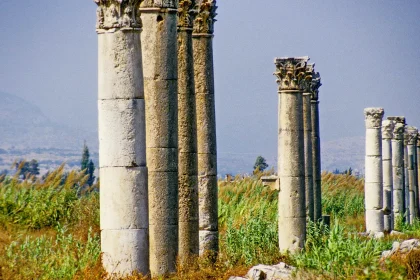
Kaş is a working town around a small harbour, with a Hellenistic theatre, Lycian tombs carved into the cliffs and narrow streets of cafés and boutiques. It is one of Türkiye’s leading scuba-diving centres, with more than a dozen dive schools. The Greek island of Kastellorizo (Meis in Turkish) lies about 6 kilometres offshore and is reached by a daily ferry, which gives residents an easy day trip into the EU. It has a mixed Turkish and foreign community and stays reasonably busy through the winter.
Kalkan was a Greek fishing and trading town called Kalamaki until the 1923 population exchange. Its old stone houses climb from a small harbour, and the surrounding slopes are now covered in villas with sea views. Its tourism has long been led by the UK market, and English is spoken almost everywhere. A large share of homes are second homes or holiday lets, so Kalkan is much quieter from November to April. For a comparison with other parts of the coast, see our guide to where to buy property in Turkey.
Areas compared
Kaş town and the Çukurbağ peninsula. The town centre suits people who want to walk to shops, restaurants, the harbour and the hospital. Homes are mainly flats and small houses, and the old quarter has conservation rules. The Çukurbağ peninsula, which runs west from the town, is lined with villas and small complexes with sea views towards Kastellorizo. It is one of the most expensive addresses in the district, and much of it is a short drive or a long walk from the centre.
Hills and villages around Kaş. Villages such as Sarıbelen, on the slopes above the Kaş–Kalkan road, and the Kaş–Kekova coast to the east offer stone houses, olive groves and quiet. Land status here needs careful checking. Some village land has long been classified as former forest (so-called 2/B land), and parts of the coast fall inside protected areas where building is heavily restricted.
Kalkan centre and the bay. Kalkan’s old town and harbour have restaurants, small shops and a marina. Around the bay, areas such as Kışla and Kalamar on the western side and Kızıltaş on the eastern side have villas, apartments and small hotels, many with pools and terraces. These are the areas most popular with foreign buyers and holiday-let investors.
İslamlar and Bezirgan. These upland villages above Kalkan are cooler in summer and greener, with traditional houses, orchards and larger plots. İslamlar has a history of landslide risk, and local media have reported building there despite restrictions. Both suit buyers who want space and a rural setting and are happy to drive.
Gelemiş and Patara. Gelemiş, the village next to the ancient city of Patara, is the gateway to Patara beach, one of the longest sandy beaches in Türkiye and a key nesting site for loggerhead turtles. The area is a specially protected area. The beach is closed to visitors at night during the nesting season, from mid-May, and new building is tightly controlled. Gelemiş suits buyers looking for a low-key village life rather than a resort.
Getting there and getting around
Kaş has no airport of its own. Dalaman Airport, in Muğla province, is the main gateway for Kalkan and for most British visitors. A private transfer to Kalkan takes about 1 hour 45 minutes, and Kaş is about two hours or more away, depending on the route. Dalaman’s international flights are mostly seasonal, with far fewer direct routes in winter. Antalya Airport offers many more year-round flights. It handled more than 30 million passengers in the first nine months of 2026, as our report on Antalya Airport explains. But the winding coastal road means a journey of three hours or more to Kaş and nearer four to Kalkan.
Minibuses link Kalkan, Kaş and Fethiye, and intercity buses run to Antalya, İzmir, Ankara and Istanbul, with fewer services outside summer. Most residents, especially in the villages and on the Kalkan slopes, need a car. The coastal road is spectacular but winding. Kalkan is also closely tied to Fethiye for shopping and services, and our guide to living in Fethiye covers the town an hour or so to the west.
Climate
Kaş has a Mediterranean climate that is a little milder than Antalya’s in summer. Long-term averages for 1991–2020 show daytime highs of about 32.5–33°C in July and August. January highs are around 16°C and lows around 9°C, which makes winters among the mildest on the coast. Annual rainfall is about 830 mm, almost all of it from November to March, often in heavy storms. In 2026, storms hit the coast from Demre to Akyaka, close to Kaş.
Many villas are built for summer use. Before buying, ask how a property is heated, whether it has been used in winter, how it is insulated and how it copes with run-off on steep slopes. In villages, check the water supply too.
What property costs in 2026
Kaş is the most expensive district in Antalya province by Endeksa’s measures. In September 2026 its average was 110,076 lira per square metre, ahead of Kemer at about 86,700 lira and Konyaaltı at about 84,500 lira. The average home value in Kaş was about 22 million lira, roughly $445,000 at mid-October 2026 exchange rates of about 49.4 lira to the dollar. In August, Endeksa put Kaş at 108,664 lira per square metre, up about 21% over a year. That is a rise below inflation, in line with the national trend of nominal gains but real declines.
For comparison, the Antalya provincial average was about 55,300 lira per square metre in June 2026, and the national average 42,488 lira in August, according to Endeksa and Emlakjet. Our Antalya guide has the city district figures.
These are model-based averages; real prices depend heavily on view, plot, pool and paperwork. A licensed sea-view villa on the Çukurbağ peninsula or in Kalkan’s Kışla or Kalamar areas can cost many times the price of a flat in Kaş town or a village house inland. Homes with a full building permit and occupancy certificate (iskan) and a valid holiday-rental permit command a premium over those without.
Endeksa’s yield estimate for Kaş was among the lowest in the province, at about 2.85% gross, or a payback period of around 35 years based on long-term rents. Buyers who expect to cover their costs from holiday lets should test those figures carefully.
Antalya is one of Türkiye’s biggest markets for foreign buyers. In August 2026, 599 homes in the province were sold to foreigners, second only to Istanbul, with Russian, Ukrainian and German buyers in the lead. District-level figures for Kaş are not published regularly. Nationally, foreigners bought 15,308 homes in the first nine months of 2026, down 4.3% on a year earlier. Our report on foreign purchases in August has more detail.
Renting in Kaş and Kalkan
Renting before buying is strongly advised, ideally through at least one winter. Emlakjet data put the average rent in Kaş district at about 34,000 lira a month in September 2026, or about 261 lira per square metre, up about 14% over a year. Long-term lets are scarce in Kalkan because so many owners let to holidaymakers, and many leases run only from autumn to spring. Kaş town has a larger long-term rental market. Rent rises on renewals are capped by law, and the cap for October 2026 renewals was 31.49%, as our rent cap report explains. Our cost of living guide compares everyday costs across the country.
Planning, protected areas and illegal building
Planning is the biggest risk for buyers in Kaş and Kalkan. Much of the district is covered by protection designations, including the Kaş–Kekova Special Environmental Protection Area, which was extended to Kaş in 2006, as well as archaeological and natural conservation sites and forest land. A 1/25,000 zoning plan for the Kaş–Kekova protected area, approved by the environment ministry in 2023, was annulled on appeal by the Konya Regional Administrative Court in March 2025 after a challenge by the Chamber of Architects and local residents. That leaves planning in parts of the area uncertain.
Illegal building has been a long-running problem. In April 2026, Kaş Municipality announced a tender to demolish 5,112 unlicensed structures, including some owned by foreigners, in areas such as Kalkan, Gelemiş, İslamlar, Gökçeören and Üzümlü. It was the tenth attempt. The previous nine tenders since 2015 had been cancelled because nobody bid. We could not confirm the outcome of the latest tender.
Before you buy, make these checks with an independent lawyer:
- Title deed. Confirm with the land registry (TKGM) that the seller owns the property outright, and check for liens, shared ownership and any annotations on the deed.
- Land status. Check whether the plot is zoned for housing, or whether it is agricultural, forest, 2/B, treasury land or inside a protected or archaeological site. Each limits what you can build or legalise.
- Building permit and iskan. A villa without an occupancy certificate may struggle to get a holiday-rental permit, insurance, a mortgage or a residence permit, and in the worst case may face demolition. A zoning amnesty certificate does not replace an iskan. See our zoning amnesty explainer.
- Extensions. Pools, terraces and extra floors added after the permit are common. Compare the property with the approved plans.
- Valuation report. A report from a licensed valuer is required in every sale to a foreign buyer.
- Licensed agent and secure payment. Use an authorised agent with a valid listing and follow the new secure payment system for property sales.
Holiday-letting rules
Holiday letting drives much of the Kalkan villa market, so the short-term rental law matters more here than almost anywhere else. Since Law No. 7464 took effect in early 2024, renting a home to tourists for up to 100 days needs a permit from the Ministry of Culture and Tourism. In a building with several units, all owners must agree. Operating without a permit can bring heavy fines, and platforms that advertise unpermitted homes can also be penalised.
The rollout was difficult in this area. In mid-2024, the villa tourism operators’ association TURVİB said about 16,000 applications had been made in Kaş, Kalkan and Fethiye, and that many had not been processed by the start of the season. It said unresolved issues such as 2/B land, treasury land and shared title deeds were blocking approvals for some villas. Rules for booking platforms are also tightening, as our report on the Booking.com and Airbnb law explains.
If you plan to let a villa, ask the seller for the permit, its number and real booking and tax records, not projections. Budget for management, cleaning, pool care, insurance and taxes. Read our short-term rental explainer before you count on rental income.
Residence permits and citizenship
Most foreign nationals can buy in Kaş and Kalkan under the national rules. A short-term residence permit based on owning a home requires a deed value of at least $200,000 for homes bought since October 2023. Many Kalkan villas pass that threshold, but some flats and village houses do not. Our residence permit guide covers the documents, including health insurance.
When the migration authority closed some neighbourhoods to new residence registrations in July 2022, none of the ten Antalya neighbourhoods on the list was in Kaş district. The status of individual addresses can still change, so check the e-ikamet system or the provincial migration office before you buy for residence purposes. Citizenship by investment requires property worth at least $400,000, as our citizenship guide explains.
Our step-by-step guide to buying property as a foreigner and our guide to purchase costs and the title deed fee cover the full process. You can browse current property for sale across Turkey on Vartur. This guide is general information only. Rules and figures are as of October 2026 and may change, so consult an independent lawyer and the relevant official office about your own case.
Healthcare, schools and services
Kaş State Hospital, in the town, has an emergency department, general surgery, paediatrics, imaging including MRI and CT, and a dialysis unit. Kalkan has family health centres, private clinics and pharmacies. For specialist care and major operations, residents usually go to Fethiye or to Antalya, which has large public and private hospitals. Residents need health insurance for a residence permit. See our guides to health insurance for foreign residents and booking public hospital appointments through MHRS.
State schools in the district teach in Turkish, and there are no international schools in Kaş or Kalkan. Families who need English-language schooling usually look at Fethiye or Antalya, or at boarding and online options. The education ministry has moved to ease school registration for foreign children.
Once you move, the usual national procedures apply: a tax number, a bank account, a residence permit, address registration, an e-Devlet account and IMEI registration for phones brought from abroad. Our moving to Turkey checklist puts these steps in order.
Daily life
Life follows the seasons. From May to October, both resorts are busy with visitors, boat trips to Kekova and Kaputaş beach, diving and restaurants. In winter, Kaş keeps a steady community, cafés and a strong outdoor culture of hiking, cycling and swimming. Kalkan becomes very quiet, and many restaurants and shops close for months. The Lycian Way runs through the district, and the stages around Kaş and Kalkan are among its best known.
Pros and cons at a glance
Reasons people choose Kaş and Kalkan
- Some of the most dramatic scenery on the Turkish coast, with clear water, islands and mountains.
- Mild winters and slightly less extreme summers than Antalya.
- Kaş is a real town with a year-round community, diving and a Greek island on the doorstep.
- Kalkan offers an English-speaking community and a well-established villa market.
Points to weigh up
- The highest prices per square metre in Antalya province, and low long-term rental yields.
- Long transfers from airports, and fewer flights in winter.
- Widespread unlicensed building, protected land and planning uncertainty.
- Holiday-let income depends on a permit that some villas cannot obtain.
- Limited specialist healthcare and no international schools.
Bottom line
Kaş and Kalkan suit buyers who put landscape, sea and a small-town pace first and are prepared to pay a premium for them. Kaş works better for year-round living, while Kalkan is best for villa owners and those who spend the summer there. Spend time in both seasons, rent before you buy, and treat title, land status, the iskan and the holiday-rental permit as essential checks, not formalities. For other options on the coast, compare our guides to Fethiye, Antalya, Alanya and Bodrum.
Frequently asked questions
Which airport is closest to Kalkan and Kaş?
Dalaman Airport is the usual gateway, about 1 hour 45 minutes from Kalkan by private transfer and around two hours or more from Kaş. Antalya Airport has more winter flights but is three to four hours away by road.
How much does property cost in Kaş and Kalkan in 2026?
Endeksa put Kaş district at about 110,000 lira per square metre in September 2026, the highest in Antalya province, with an average home value of about 22 million lira. Sea-view villas cost far more than the average.
Can I rent my Kalkan villa to holidaymakers?
Only with a short-term rental permit from the Ministry of Culture and Tourism under Law No. 7464. Villas with unresolved land or licensing issues have had difficulty getting one, so check the permit before you buy.
Is Kaş or Kalkan better for living year-round?
Kaş town is generally better for year-round living, with a hospital, shops and an active winter community. Kalkan is quieter in winter because many homes are second homes or holiday lets.
Can I get a residence permit by buying in Kaş or Kalkan?
Yes, if the deed value is at least $200,000 for a home bought since October 2023 and the address is open to residence registration. None of the Antalya neighbourhoods closed in July 2022 was in Kaş, but check the current status first.
Why is illegal building a concern in Kaş?
Much of the district is protected land, and thousands of structures were built without permits. In April 2026 the municipality tendered the demolition of 5,112 illegal structures, so buyers should verify the building permit and occupancy certificate.
Last updated: 20 October 2026. Rules, fees and thresholds in Türkiye change often; check the latest official guidance or ask a licensed lawyer before you act.
Sources
- Short-term residence permit required documents (Presidency of Migration Management, e-ikamet)
- Kaş State Hospital services (Ministry of Health, Antalya Provincial Health Directorate)
- Antalya district populations, TÜİK data, July 2026 (Gazete Vatan)
- Endeksa September 2026 Antalya district prices (Antalya Hürses)
- Endeksa August 2026 Antalya district prices (Antalya Hürses)
- Endeksa June 2026 Antalya home values by district (Yeni Alanya)
- Emlakjet and Endeksa August 2026 home value report (Foreks)
- Antalya rental market by district, September 2026 (Emlakjet)
- Antalya sold 599 homes to foreigners in August 2026, TÜİK data (Antalya Körfez)
- Foreign home sales September 2026, TÜİK data (Cumhuriyet)
- Kaş: tenth tender to demolish 5,112 illegal structures, April 2026 (CNN Türk)
- Kaş–Kekova protected-area zoning plan annulled, March 2025 (Milliyet)
- Villa operators' short-term rental permit problems in Kaş, Kalkan and Fethiye, July 2024 (Ekonomim)
- Foreign land sales and unlicensed villas around Kaş and Kalkan (soL Haber)
- Ten neighbourhoods closed to foreign residence in Antalya, July 2022 (DHA)
- Patara Specially Protected Area case file (Council of Europe, Bern Convention)
- Beaches closed at night for loggerhead turtles, including Patara (Hürriyet Daily News)
- Kaş: population, climate normals 1991–2020, Kekova and Kastellorizo (Wikipedia, citing TÜİK and MGM)
- Kalkan: history and population (Wikipedia)
- How to get to Kaş (Turkey Travel Planner)
- Planning a trip to Kalkan: transfers from Dalaman and Antalya (Frommer's)
- USD/TRY rate, 14 October 2026 (Hisse.net)
Photo: William Neuheisel from DC, US / CC BY 2.0, via Wikimedia Commons