
Fergani Uzay Teknolojileri, the Turkish space start-up founded by Baykar chairman Selçuk Bayraktar, placed its sixth experimental satellite into orbit on Tuesday, the company’s latest step towards a planned domestic satellite constellation.
The satellite, named FRG-100D4, lifted off at 14:04 Turkish time on 20 October from Cape Canaveral Space Force Station in the United States aboard SpaceX’s Bandwagon-5 rideshare mission, Hürriyet reported. About 63 minutes later, at 15:07, it separated from the rocket and reached its target orbit at an altitude of 590 kilometres.
A heavier, more powerful spacecraft
Weighing 160 kilograms, FRG-100D4 carries communication and navigation capabilities and is described by the company as its satellite with the highest power generation so far. Fergani says it was developed entirely in Türkiye.
Domestically built subsystems on board include a reaction wheel, magnetic torque rods, a magnetometer, an inertial measurement unit (IMU), a GNSS receiver, deployable solar panels, a battery pack, a regenerative modem and a phased-array antenna. The satellite also carries an onboard computer supported by artificial intelligence.
Baykar is best known internationally as the maker of the Bayraktar TB2 and Akıncı drones. Selçuk Bayraktar, the company’s chairman and technology leader, set up Fergani as a separate venture to move the group’s engineering base into space hardware.
Road to the Uluğ Bey constellation
The launch is presented as a key test for the Uluğ Bey constellation, named after the 15th-century astronomer. Fergani plans to build more than 200 satellites within five years using only its own resources, and is also developing a domestic launch vehicle. Constellations of small satellites in low Earth orbit are used for services such as positioning, communications and Earth observation.
The company’s earlier missions include FGN-100-D1 in January 2025, FGN-100-D2 on 2 November 2025, and the FGN-TUG-S01 orbital transfer vehicle with hybrid propulsion on 28 November 2025, which itself deployed a small cubesat, FRG-10D1. Its fifth vehicle, FGN-100-D3, went up on 29 March 2026.
Türkiye has been pushing to expand its space and telecoms capabilities on several fronts. State operator Türksat recently signed a satellite deal with China Satcom during the International Astronautical Congress in Antalya, while Turkcell and TÜBİTAK have been testing domestic 6G prototypes. Defence electronics group Aselsan has also reported a run of large contracts, including more than $6 billion in two weeks.
Foreigners interested in Türkiye’s technology sector, or considering relocating for work, can find practical guidance in our moving to Türkiye checklist.
Sources
- Fergani’nin altıncı uydusu uzayda (Hürriyet)
- Milli uydu yörüngede: Fergani’nin altıncı uydusu yörüngeye yerleşti (NTV)
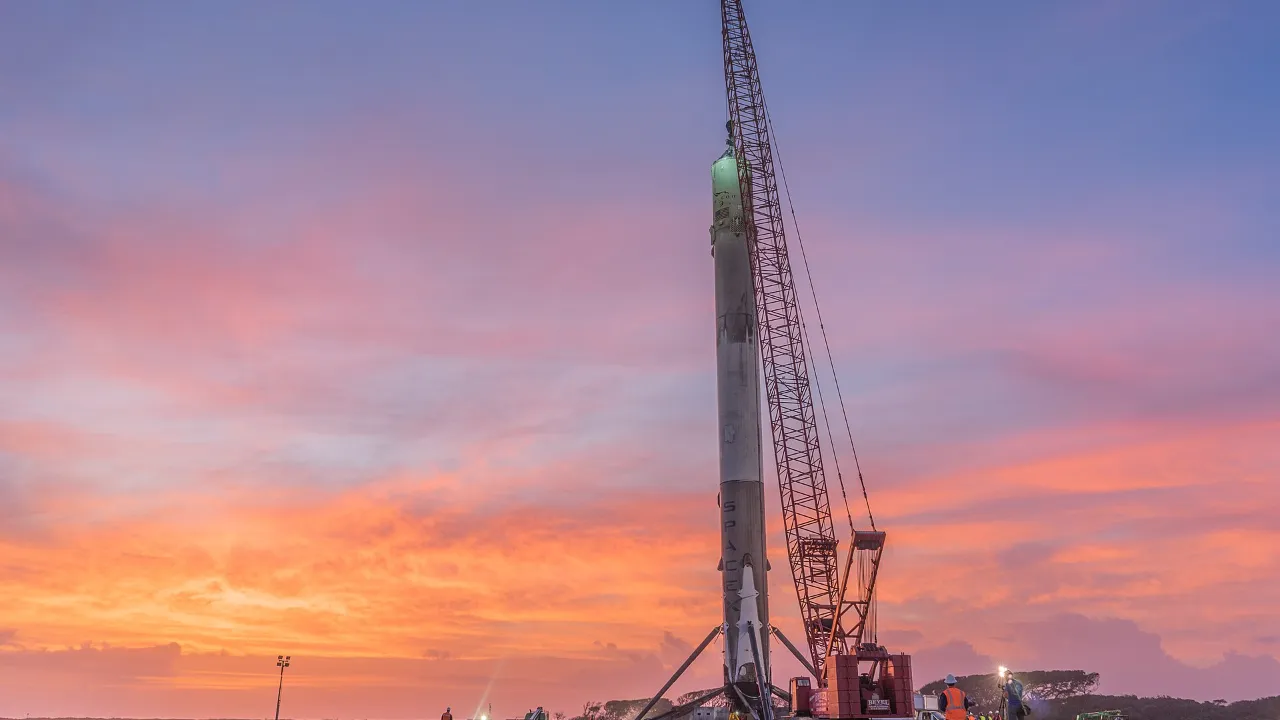
Photo: SpaceX Photos / CC0, via Wikimedia Commons