
Rhodes, Kos, Symi and Kastellorizo (Meis) are close enough to the Turkish coast for a day or weekend trip, and many foreign residents of Fethiye, Marmaris, Kaş and Bodrum use the ferries for a change of scene, shopping or a visa-free break. Since 2025, though, the border on the Greek side has changed. The EU’s new Entry/Exit System (EES) now records non-EU travellers digitally, and winter ferry timetables are much thinner than summer ones. This guide explains the main routes, passport and visa rules, what happens when you come back to Türkiye with a residence permit, and what to carry, as of November 2026.
This is general information, not legal or immigration advice. Border rules and ferry timetables change, so check with the ferry operator and official sources before you travel.
Key points
- Greece is in the Schengen area. A Greek island day trip counts towards the Schengen 90 days in any 180-day period limit for visa-free visitors.
- The EU’s Entry/Exit System (EES) has been fully in use at all Schengen external borders, including Greece, since 10 April 2026. It records your fingerprints and facial image and replaces passport stamps for non-EU short-stay visitors.
- EES registration is free, needs no pre-registration and your record is valid for three years.
- ETIAS, the EU travel authorisation for visa-free visitors, is not yet in operation. The EU says it will announce the start date months in advance.
- If you hold a valid Turkish residence permit, you do not need a visa to re-enter Türkiye, under Article 12 of Law No. 6458.
- Winter ferry services are reduced. Fethiye–Rhodes, Marmaris–Rhodes and Kaş–Meis all run less often from November.
The main routes
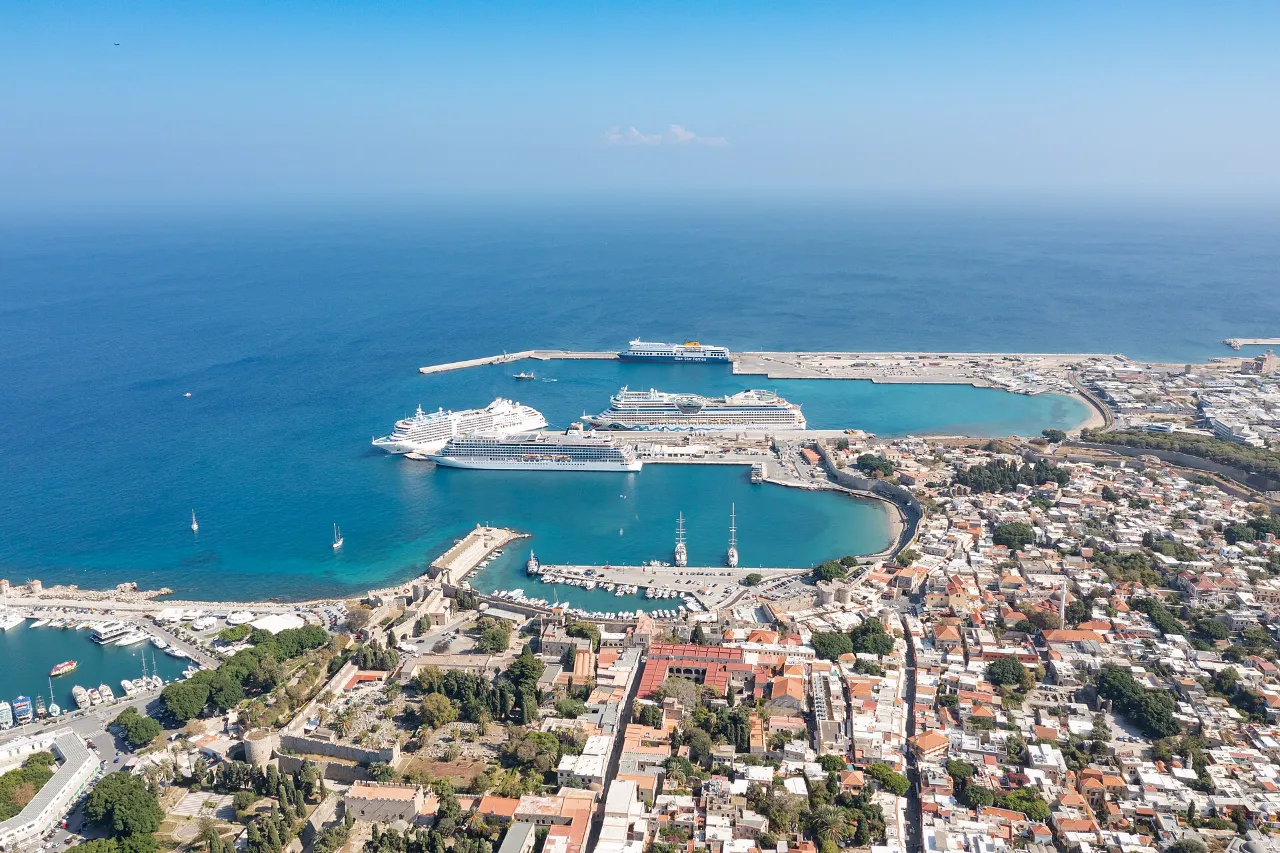
Fethiye–Rhodes. The crossing takes about 1.5 hours, according to Ferryhopper, Direct Ferries and the Turkish timetable site Feribot Seferleri. Feribot Seferleri, checking timetables on 30 October 2026, listed Tilos Travel’s winter sailings as Fethiye to Rhodes on Wednesdays and Fridays at 08:25 and Saturdays at 09:30, with returns from Rhodes on Wednesdays, Fridays and Sundays at 15:00. Ferryhopper also shows Tilos Travel running about three days a week in winter and daily in summer. Ferries arrive in Rhodes Town, close to the old town.
Marmaris–Rhodes. The crossing takes about an hour. Feribot Seferleri says the winter timetable runs from 16 November to 28 February on Mondays, Wednesdays and Saturdays, with daily sailings in summer. Ferryhopper’s data, based on last year, also shows fewer sailings in winter. The two sites name different operators, so check who is sailing before you book.
Kaş–Meis (Kastellorizo). This is the shortest crossing, with the island just off Kaş. Ferryhopper and Feribot Seferleri both show fewer sailings in winter than in summer, so check the current timetable with the operator.
Bodrum–Kos. This route keeps the most winter sailings. Feribot Seferleri listed Tilos Travel departures from Bodrum at 09:00 and 16:00 from 4 November 2026, with returns from Kos at 09:15 and 16:00. Ferryhopper says several operators sail the route and that Tilos Travel stays daily in winter, while others drop to weekly or a few days a week.
Cars. Ferryhopper says the Fethiye, Marmaris, Kaş and Bodrum boats to the islands have no car decks, so plan to go on foot.
Passports and visas for the Greek side
Passport validity. For UK nationals, GOV.UK says your passport must have been issued less than 10 years before the day you arrive in the Schengen area, and must be valid for at least three months after the day you plan to leave. These are Schengen-wide rules, so check your passport even if you are not British.
90 days in 180. Visa-free visitors, including UK citizens, can spend up to 90 days in any 180-day period in the Schengen area. Earlier trips to any Schengen country in the last 180 days count. GOV.UK warns that overstaying may lead to a ban on entering Schengen countries for up to three years.
If your nationality needs a Schengen visa. The EES applies whether or not you need a short-stay visa, according to the EU’s information leaflet. Check the visa requirements for your nationality with the Greek consulate before you travel.
Turkish citizens. If your spouse or family members are Turkish citizens, they may be able to use Greece’s express visa scheme. It lets Turkish citizens visit 12 eastern Aegean islands, including Rhodes, Kos, Symi and Kastellorizo, for up to seven days, according to Euronews and Greek newspaper To Vima. To Vima reported in April 2026 that the scheme was extended to April 2027. Ferryhopper and Feribot Seferleri both give the fee as €60. The visa does not allow travel on to mainland Greece or other Schengen countries.
The Entry/Exit System (EES)
According to eu-LISA, the EU agency that runs the system, EES started operating in October 2025 and was fully deployed at all Schengen external borders by 10 April 2026. The Greek Ministry of Foreign Affairs confirms that Greece applies it in full.
What happens. At your first crossing, border staff take your fingerprints and a facial image and record your passport details and the date and place of entry and exit. There is no fee and no pre-registration. The record is valid for three years, so you usually do not have to enrol again on each trip. According to the Greek Ministry, refusing to give biometric data can lead to refusal of entry.
Children. GOV.UK says children aged 11 or under do not have fingerprints taken but may be photographed.
UK travellers. GOV.UK’s Greece advice says Greek authorities have said they will not collect biometrics from UK travellers, and that you should follow instructions from officials on the ground.
Queues. GOV.UK warns of longer waits at the border. Immigration law firm Newland Chase said in September 2026 that the EES flexibility period, during which checks could be relaxed at busy times, ended on 6 September 2026.
ETIAS. The European Commission says ETIAS is not yet operating and no applications are being accepted. The fee will be €20 once it starts. Newland Chase reports that the launch is likely to move to 2027.
Coming back to Türkiye with a residence permit
Under Article 12(1)(b) of the Law on Foreigners and International Protection (No. 6458), foreigners who hold a valid residence or work permit on the day they enter Türkiye do not need a visa. Show your residence permit card with your passport at the Turkish port.
Long absences can affect a short-term residence permit. Article 33(1)(c) of the same law lets the authorities cancel or refuse to extend a short-term permit if you spent more than 120 days in total abroad in the last year. A day trip will not come close to that, but it adds up with other travel. Our guide to renewing a residence permit covers the renewal side.
If your permit is being renewed, the Presidency of Migration Management says the application receipt (müracaat belgesi) lets you travel abroad and return while the extension is pending. For general entry rules, see our Türkiye entry requirements guide.
What to carry
- your passport, checked against the Schengen validity rules;
- your Turkish residence permit card, or the renewal receipt if your renewal is pending;
- any Schengen visa your nationality needs;
- your return ferry ticket. GOV.UK says border staff may ask for a return or onward ticket and proof that you have enough money for your stay.
Arrive early. Direct Ferries and Feribot Seferleri both advise reaching the Fethiye terminal 60 to 90 minutes before departure for check-in and passport control.
FAQ
Q: Does a day trip to Rhodes count towards my Schengen 90 days? A: Yes. Every day you spend in Greece counts towards the 90 days in any 180-day period for visa-free visitors.
Q: Do I need to register for EES before I travel? A: No. Registration happens at the border on your first crossing. It is free and lasts three years.
Q: Do I need ETIAS for Rhodes or Kos now? A: No. ETIAS is not yet operating, and the EU says it will announce the start date months in advance.
Q: Will I have problems re-entering Türkiye? A: Not if your residence permit is valid. Under Article 12 of Law No. 6458, valid residence permit holders are exempt from the visa requirement.
Q: Do the ferries run in winter? A: Some do, but less often. Fethiye–Rhodes and Marmaris–Rhodes drop to about three days a week, Kaş–Meis also runs less often, and Bodrum–Kos keeps daily sailings. Check with the operator before you travel.
Q: Can my Turkish spouse come without a Schengen visa? A: Turkish citizens can use Greece’s express visa scheme for up to seven days on 12 islands, including Rhodes, Kos and Kastellorizo. It was extended to April 2027.
Sources
- Entry/Exit System fully deployed across EU (eu-LISA)
- New EU Digital Entry/Exit System takes full effect on 10 April 2026 (Greek Ministry of Foreign Affairs)
- Entry/Exit System (European Commission)
- EES information leaflet (Italian Ministry of Foreign Affairs)
- ETIAS (European Commission)
- Schengen EES flexibility lapses as ETIAS launch appears likely to move to 2027 (Newland Chase)
- Greece travel advice: entry requirements (GOV.UK)
- Yabancılar ve Uluslararası Koruma Kanunu 6458 (Lexpera)
- Yabancı ikamet izni broşürü (Göç İdaresi Başkanlığı)
- Türkiye’ye girişte vize muafiyeti (Akademik Hukuk)
- Ege adaları kış seferleri Kasım 2026 (Feribot Seferleri)
- Fethiye–Rodos feribot rehberi 2026 (Feribot Seferleri)
- Kaş port (Feribot Seferleri)
- Ferry from Fethiye to Rhodes (Ferryhopper)
- Ferry from Marmaris to Rhodes (Ferryhopper)
- Ferry from Kaş to Kastellorizo (Ferryhopper)
- Ferry from Bodrum to Kos (Ferryhopper)
- Visa express to 12 Greek islands for Turkish tourists (Ferryhopper)
- Travelling from Fethiye to Rhodes (Direct Ferries)
- How Greece’s door visa gives Turkish visitors easier entry to islands in the EU (Euronews)
- Successful visa express scheme for isles extended to 2027 (To Vima)
Photo: dronepicr / CC BY 2.0, via Wikimedia Commons