
Underwater archaeologists working off Kekova Island on Türkiye’s Mediterranean coast have recovered amphorae dating back about 4,400 to 4,700 years from a wreck that officials describe as the world’s oldest known shipwreck, Culture and Tourism Minister Mehmet Nuri Ersoy announced on Oct. 14.
Ersoy said on social media that the finds shed light on the long history of maritime trade along the Anatolian coast. The large clay jars were most likely used to carry olive oil or wine.
Clay from the Jordan Valley
According to the ministry, clay analyses indicate the amphorae were probably produced in workshops in the Jordan Valley. Similar vessels have been found near the pyramids at Giza, Saqqara and Abusir in Egypt, at Troy in northwest Türkiye and on Crete, pointing to sea-borne trade networks that linked distant parts of the Eastern Mediterranean in the Early Bronze Age.
Researchers suggest the ship may have set out from a port on the Levantine coast and been heading towards Troy or Crete when it sank, though this remains a hypothesis.
One of the recovered jars has nine distinct marks and two holes in its body. Examinations suggest it may have been used as a churn to make cheese or butter, raising the possibility that sailors carried goats on long voyages and produced dairy food on board.
From survey to full excavation
Earlier underwater surveys by Akdeniz University had already recovered amphora samples from the wreck that suggested an Early Bronze Age date. A full excavation began in 2026 under ministry permits, led by the Antalya Museum Directorate with Assoc. Prof. Hakan Öniz as scientific director. Ersoy congratulated the team and said work to protect Türkiye’s underwater cultural heritage was continuing.
The ministry did not say how many amphorae have been recovered or at what depth the wreck lies.
A coastline of sunken history
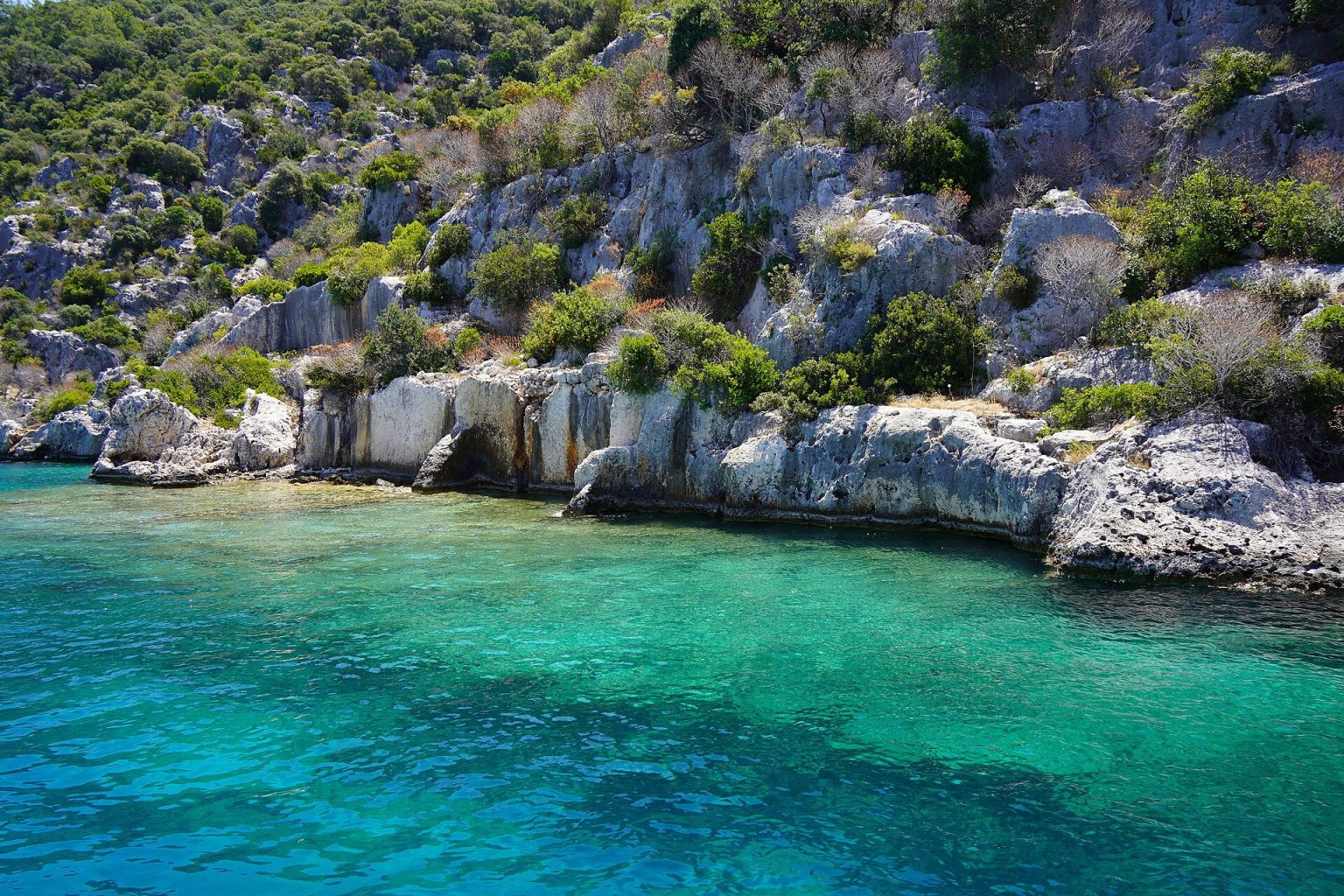
Kekova lies off the Lycian coast of Antalya province, between the towns of Kaş and Demre. The area is best known to visitors for the partly submerged ruins of the ancient city of Simena and the so-called "sunken city" along the island’s northern shore, which can be seen from glass-bottomed tour boats departing from Üçağız and Kaleköy. Swimming and diving are restricted over the ruins to protect the site.
The Mediterranean coast of Türkiye is one of the world’s richest areas for shipwreck research. The Bodrum Museum of Underwater Archaeology displays finds from the Uluburun wreck, a Late Bronze Age ship discovered off Kaş in the 1980s that was until now among the best-known early wrecks in the region.
Sources
- Bakan Ersoy duyurdu: Dünyanın en eski batığı Kekova’da bulundu (Hürriyet)
- Kekova’da dünyanın en eski batığına ait amforalar bulundu (Anadolu Ajansı)
Photo: JamesDavidShoots / CC BY-SA 4.0, via Wikimedia Commons