
Istanbul is Türkiye’s largest city and its biggest property market for foreigners, with more homes sold to foreign buyers there than in any other province. It offers year-round jobs, schools, hospitals and flights, but also high rents, heavy traffic and a serious earthquake risk that makes the age and quality of a building more important than its view. This guide covers how the main districts on the European and Asian sides differ, what homes and rents cost in 2026, the residence-permit and citizenship rules that shape demand, and the checks every buyer should make.
- Istanbul at a glance
- Getting there and getting around
- Climate
- Earthquake risk, building age and urban renewal
- European-side districts
- Asian-side districts
- What property costs in 2026
- Residence permits and closed neighbourhoods
- Citizenship-route demand
- Renting in Istanbul
- Healthcare and schools
- Buying checklist for Istanbul
- Pros and cons at a glance
- Bottom line
- Frequently asked questions
Key points
- Istanbul had 15.75 million registered residents at the end of 2025, about 18.3% of Türkiye’s population, according to TÜİK.
- Foreigners bought 7,989 homes in Istanbul in 2025, more than in any other province.
- The average asking price was about 65,000 lira per square metre in July 2026, but district averages ranged from about 33,000 lira in Esenyurt to more than 177,000 lira in Beşiktaş, according to Endeksa data.
- Istanbul has the highest average rent in the country, at 45,510 lira a month in August 2026.
- Most of the building stock predates modern earthquake codes. Building age, ground conditions and urban renewal status should be checked before any purchase.
Istanbul at a glance
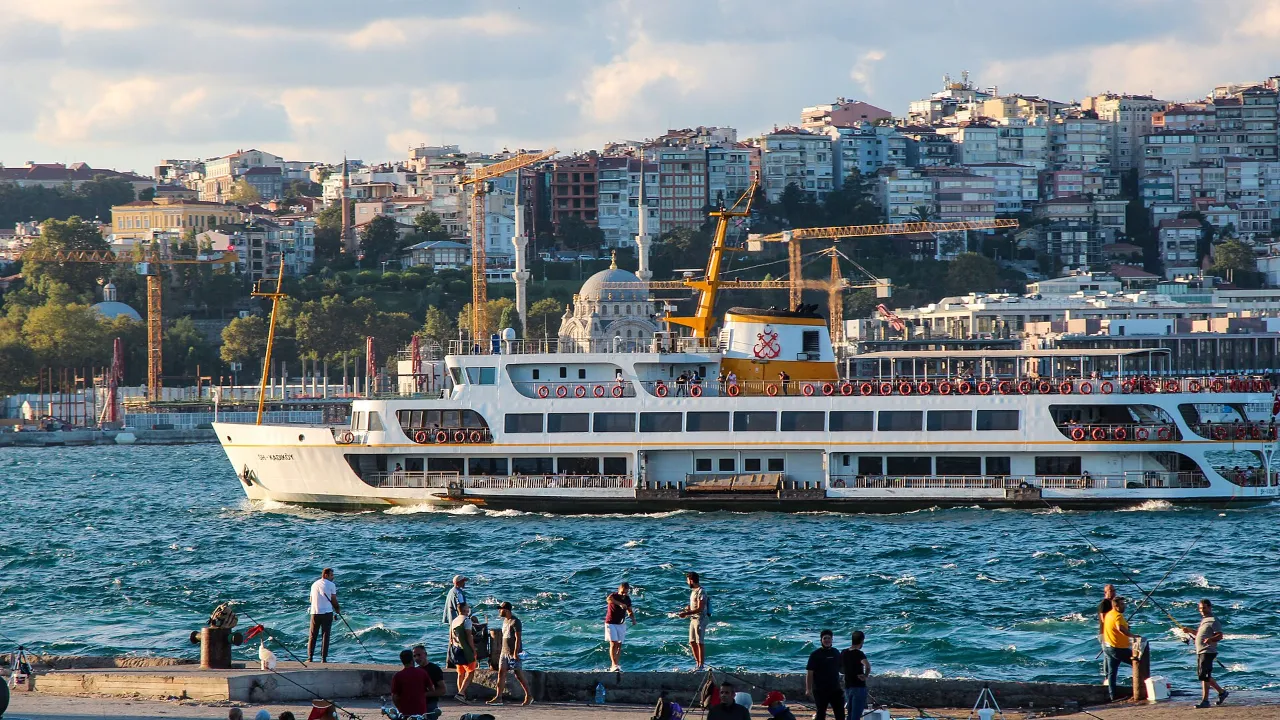
The city spans two continents. The European side holds the historic peninsula, the business districts of Levent and Maslak, and fast-growing western suburbs towards Beylikdüzü and Büyükçekmece. The Asian (Anatolian) side is generally more residential, with long seafront districts such as Kadıköy and Maltepe and newer towers in Ataşehir. The Bosphorus divides the two and is crossed by bridges, road and rail tunnels and frequent ferries.
Istanbul accounted for about 16% of all home sales in Türkiye in August 2026, with 20,426 homes changing hands that month, according to TÜİK figures. It is also the main market for foreign buyers; nationally, Russians, Iranians, Ukrainians, Germans and Iraqis were the largest buyer groups in 2025.
Getting there and getting around
Istanbul has two international airports. Istanbul Airport, on the European side north of the city, handled about 48.1 million passengers in the first seven months of 2026, most of them international, according to provisional figures from the State Airports Authority (DHMİ). Sabiha Gökçen, on the Asian side, handled about 28 million. Between them they offer direct flights to most of Europe, the Middle East and Central Asia all year, which is a major advantage over the coastal resorts.
Inside the city, the metro, Marmaray suburban rail under the Bosphorus, the metrobus line, trams and ferries are the fastest way to move around at peak times. A full-fare single ride with an İstanbulkart cost 42 lira after the February 2026 fare increase. Traffic is among the worst in Europe, so living near a rail or ferry line matters more than living close to the centre. Drivers should note that the Bosphorus bridges and motorways are tolled, and payment is by HGS tag.
Climate
Istanbul has a mild, humid climate rather than a Mediterranean resort one. Long-term averages at Kireçburnu in Sarıyer show daytime highs of about 28°C in July and August and about 9°C in January and February, with winter lows of around 3–4°C. Annual rainfall is around 850 mm, and the city sees snow on roughly 15 days a year. Heavy autumn storms can cause flash flooding in low-lying streets, as recent floods showed, so ask whether a ground-floor or basement flat has ever flooded. Many homes are heated with natural gas boilers, so check the building’s insulation and recent gas bills.
Earthquake risk, building age and urban renewal
The North Anatolian Fault runs under the Sea of Marmara south of the city, and scientists have long warned that a major earthquake is likely in the coming decades. This is the single most important factor for anyone buying in Istanbul.
The scale of the problem is large. Istanbul Metropolitan Municipality (İBB) officials have said the city has about 1.2 million buildings, of which roughly 850,000 were built before 2000, when building controls were tightened after the 1999 Marmara earthquake. In 2024, the head of İBB’s earthquake risk department estimated that a quake of magnitude 7.5 or more could heavily damage or destroy about 200,000 buildings. In 2025, Environment and Urbanisation Minister Murat Kurum said about 600,000 homes in Istanbul needed urgent renewal.
Risk varies by area. İBB officials have described the southern districts along the Marmara coast, including Avcılar, Küçükçekmece, Büyükçekmece, Esenyurt and Silivri, as the most exposed, partly because of softer ground. Districts such as Başakşehir, Sarıyer and Beşiktaş were cited as having firmer ground. Ground is only half the story, though: construction quality matters as much.
Practical steps for buyers:
- Check the construction year and permit. Buildings licensed after 2000, and especially those designed under the 2018 earthquake code, are generally a safer starting point. Ask for the building permit and occupancy certificate (iskan).
- Ask about the ground. Municipal microzonation maps and the building’s soil survey report show ground conditions.
- Commission an independent assessment. For older buildings, a structural engineer’s report or a licensed risk assessment is worth paying for.
- Find out whether the building is in renewal. Many older blocks are being demolished and rebuilt under the urban transformation law. Buying into one can mean a better building later, but also years of rent while it is rebuilt and a negotiation with developers and neighbours. Our explainer on Istanbul’s “Half Is on Us” scheme sets out how renewal support works.
- Get compulsory earthquake insurance (DASK). It is required for a title deed transfer, but its cover is capped, so consider additional home insurance.
The building collapse in Maltepe was a reminder that structural problems are not limited to earthquakes.
European-side districts
Beşiktaş. The most expensive district, at an Endeksa average of about 177,300 lira per square metre in July 2026. It includes Bosphorus neighbourhoods such as Bebek, Arnavutköy, Etiler and Levent. A July 2026 compilation of listings data put Bebek above 250,000 lira per square metre. It suits buyers who want the Bosphorus, top schools and easy access to the business districts, and it has firmer ground than the Marmara coast.
Şişli and Nişantaşı. Nişantaşı is Istanbul’s high-street fashion and café quarter, with period apartment buildings and prices above 200,000 lira per square metre in the best streets. Much of the stock is old, so building checks are essential. The wider district includes the Mecidiyeköy and Bomonti business areas.
Beyoğlu and Cihangir. Cihangir, Galata and the streets around İstiklal Avenue attract creative professionals, long-stay expats and renters who want to walk everywhere. Many buildings are historic and some are listed, which limits renovation. Average rents in Beyoğlu were about 49,200 lira for a 100 m² home in Endeksa’s September 2026 data.
Sarıyer. Stretching up the Bosphorus to the Black Sea, Sarıyer includes Emirgan, Tarabya and Yeniköy, as well as the forest suburbs of Zekeriyaköy and the new business area of Maslak. The July 2026 average was about 155,000 lira per square metre. Families are drawn by villas, gardens and international schools nearby.
Kağıthane. A former industrial valley that has been rebuilt with residential towers close to Levent and Maslak. It offers new buildings at lower prices than Beşiktaş or Şişli, with average rents of about 39,100 lira for 100 m².
Başakşehir. A planned district in the north-west with large gated complexes, wide roads and the Başakşehir Çam and Sakura City Hospital, which opened in 2020 with 2,682 beds and was built on more than 2,000 seismic isolators. Rents averaged about 35,700 lira for 100 m².
Beylikdüzü, Esenyurt and Büyükçekmece. These western suburbs have the largest supply of new, affordable flats, and they have long been popular with foreign buyers and developers. Esenyurt is the cheapest district in the city, at an Endeksa average of about 33,200 lira per square metre in July 2026, and Beylikdüzü averaged about 47,800 lira. Büyükçekmece offers villas and lakeside or sea-view complexes. Rents are the lowest of the districts in this guide, at about 22,800–28,900 lira for 100 m². These areas lie in the higher-risk southern belt, are a long commute from the centre, and Esenyurt has been closed to new residence registrations, as explained below.
Asian-side districts
Kadıköy. The Asian side’s cultural centre, with Moda, Fenerbahçe, Caddebostan and Suadiye along the coast. It was the second most expensive district in July 2026, at about 169,100 lira per square metre, and had the highest average rent in Endeksa’s September data, at about 65,100 lira for 100 m². Much of the coastal stock is being rebuilt through urban renewal, so new flats appear alongside old blocks.
Üsküdar. A more traditional, residential district on the Bosphorus with neighbourhoods from Kuzguncuk and Çengelköy to Çamlıca. Its July 2026 average was about 112,400 lira per square metre. Rents averaged about 42,500 lira for 100 m².
Ataşehir. A district of residential towers and offices built around the city’s planned financial centre. It suits professionals who want modern, serviced buildings. Average rents were about 46,000 lira for 100 m².
Maltepe, Kartal and Pendik. These coastal districts further east offer a long seafront park, Marmaray rail links and a large supply of renewed and new flats at lower prices than Kadıköy. Pendik is the closest to Sabiha Gökçen Airport. Average rents for 100 m² were about 44,000 lira in Maltepe, 41,300 lira in Kartal and 33,000 lira in Pendik.
What property costs in 2026
Istanbul was the second most expensive province after Muğla in July 2026, at an average of 65,078 lira per square metre, according to Emlakjet and Endeksa. The average home sold for about 7.36 million lira in August 2026, or roughly $149,000 at mid-October exchange rates of about 49.4 lira to the dollar. Prices rose 27.2% in nominal terms over the year, but fell 3.4% after inflation. The central bank’s house price index showed Istanbul up 26.3% in the year to August, faster than the other large cities.
Averages hide wide gaps between districts and between new and old buildings: a new flat in a gated complex in Beylikdüzü and a 1970s apartment in Nişantaşı are separate markets. For a comparison with Antalya, Bodrum and other cities, read our guide to where to buy property in Turkey.
You can browse current property for sale across Turkey, including Istanbul, on Vartur.
Residence permits and closed neighbourhoods
A residence permit based on property ownership requires a home with a title deed sale price of at least $200,000 for purchases made since 16 October 2023. The rule applies to all provinces, including Istanbul. Health insurance and other documents are also required. See our residence permit guide for the full rules, including renewals.
Istanbul has an extra complication. Since 2022, the Presidency of Migration Management has closed neighbourhoods where foreigners make up a high share of residents to new residence registrations. In July 2023, it said 10 Istanbul districts were closed to new residence-permit applications: Fatih and Esenyurt (since January 2021), and Avcılar, Bahçelievler, Başakşehir, Bağcılar, Esenler, Küçükçekmece, Sultangazi and Zeytinburnu (since October 2022).
In June 2026, Turkish and English-language media reported that most previously closed areas were accepting applications again in the e-İkamet system, with Fatih and Esenyurt still restricted. The migration authority had not published a comprehensive official list confirming the change when this guide was written in October 2026, and the situation can change. Before buying, especially in Esenyurt, Fatih, Başakşehir or the other districts above, check the neighbourhood’s status with the migration authority or through a lawyer. Owning a home in a closed area does not by itself stop you buying it, but it may stop you registering an address or getting a permit there.
Citizenship-route demand
Istanbul is the main market for buyers seeking Turkish citizenship through property, which requires at least $400,000 of qualifying built property, a valuation report, payment through a Turkish bank and a three-year no-sale annotation on the title deed. That demand has shaped the market: many new projects in Başakşehir, Beylikdüzü, Esenyurt, Kağıthane and Ataşehir have been marketed in dollars to citizenship buyers. Officials are scrutinising files more closely in 2026, and a proposal to raise the threshold has been reported; see our report on new-home sales and the $750,000 proposal. Full rules are in our citizenship by investment guide.
Buyers should be cautious about developer prices aimed at foreigners. The independent valuation, not the asking price, determines whether a property qualifies, so compare prices for similar resale units in the same area before committing.
Renting in Istanbul
Rent is the biggest monthly cost for most newcomers. Istanbul’s average rent was 45,510 lira in August 2026, according to Emlakjet and Endeksa, up 9.4% after inflation while rents fell in real terms nationally. The central bank’s index of rents paid by new tenants rose 34.5% in Istanbul over the year to August.
Endeksa’s district data for September 2026, calculated for a 100 m² home, ranged from about 22,800 lira a month in Esenyurt to 59,000–59,200 lira in Sarıyer and Beşiktaş and 65,100 lira in Kadıköy. Rent increases on renewals are capped by law; the cap for October 2026 renewals was 31.49%, as our rent cap report explains. Landlords commonly ask for a deposit of one or more months’ rent, and agents usually charge a commission. Renting to holidaymakers requires a permit under the short-term rental law. Our cost of living guide covers utilities, food and transport.
Healthcare and schools
Istanbul has the country’s widest choice of healthcare. Large public city hospitals, university hospitals and many private hospital groups with international patient departments operate on both sides of the Bosphorus. Public appointments are booked through the MHRS system. Residence-permit holders need health insurance, and our health insurance explainer sets out the options.
The city also has the largest choice of international schools in Türkiye. They include the British International School, with campuses in Etiler and Zekeriyaköy; Istanbul International Community School, which teaches the IB; Istanbul International School in Çamlıca; and Keystone International School on the Asian side. Fees are high, often set in foreign currency, and school buses are an extra cost. State schools teach in Turkish; the education ministry has moved to ease registration for foreign children.
Buying checklist for Istanbul
- Title deed and debts. Confirm ownership, liens and any annotations with the land registry (TKGM).
- Permits and building age. Check the building permit, iskan and construction year, and get structural advice on older buildings.
- Residence status of the neighbourhood. Confirm it is open to residence registration if you plan to live there on a permit.
- Valuation report. It is mandatory in sales involving foreigners and decisive for citizenship.
- Licensed agent and secure payment. Use an agent with an authorised listing and follow the secure payment system.
- Costs. Budget for the title deed fee, agency commission, valuation and DASK; our purchase costs guide has the details.
Our step-by-step guide to buying property as a foreigner covers the full process, and our moving to Turkey checklist covers the tax number, address registration, bank account and e-Devlet. This guide is general information only. Consult an independent lawyer and the relevant official office about your own case.
Pros and cons at a glance
Reasons people choose Istanbul
- Year-round jobs, culture and nightlife.
- Two large airports with direct flights to most of Europe, the Middle East and Asia.
- The widest choice of hospitals and international schools in the country.
- Deep rental demand from residents, not only tourists.
- The largest supply of property above the citizenship threshold.
Points to weigh up
- A serious earthquake risk and an ageing building stock.
- The highest rents in Türkiye and fast-rising local living costs.
- Long commutes and heavy traffic.
- Restrictions on residence registration in some districts.
- Very large price gaps that make comparisons and valuations tricky.
Bottom line
Istanbul suits foreigners who want a full city life, reliable flights and a deep market for both buying and renting. It suits less well those looking for a quiet, low-cost coastal retirement, for which our guides to Fethiye, Antalya, Alanya and Bodrum may be more useful. Choose the building before the view: newer construction, firm ground and clean paperwork matter more in Istanbul than anywhere else in Türkiye. Rent for a few months in the district you like, check its residence-permit status, and get structural and legal advice before you pay.
Frequently asked questions
How much does a home in Istanbul cost in 2026?
Emlakjet and Endeksa put Istanbul’s average at 65,078 lira per square metre in July 2026, and the average home sold for about 7.36 million lira in August. District averages ranged from about 33,000 lira per square metre in Esenyurt to more than 177,000 lira in Beşiktaş.
Which Istanbul districts are closed to residence permits?
In 2023 the migration authority listed 10 Istanbul districts closed to new applications, including Fatih, Esenyurt and Başakşehir. Media reports in June 2026 said most had reopened except Fatih and Esenyurt, but no comprehensive official list had been published, so check the neighbourhood’s status before buying.
Is it safe to buy property in Istanbul given the earthquake risk?
The risk is real and much of the building stock predates 2000. Buyers can reduce it by choosing newer buildings with full permits, checking ground conditions, commissioning a structural assessment for older blocks and taking out earthquake insurance.
How much is rent in Istanbul?
The citywide average was 45,510 lira a month in August 2026, according to Emlakjet and Endeksa. Endeksa’s September data for a 100 m² home ranged from about 22,800 lira in Esenyurt to about 65,100 lira in Kadıköy.
Can I get Turkish citizenship by buying in Istanbul?
Yes, with at least $400,000 of qualifying built property confirmed by a valuation report, paid through a Turkish bank and kept for three years. Files are being scrutinised closely in 2026, so take legal advice before paying.
Which airport should I use in Istanbul?
Istanbul Airport on the European side has the widest international network, while Sabiha Gökçen on the Asian side is closer to Kadıköy, Ataşehir, Maltepe, Kartal and Pendik. Both operate direct flights all year.
Last updated: 17 October 2026. Rules, fees and thresholds in Türkiye change often; check the latest official guidance or ask a licensed lawyer before you act.
Sources
- Address-Based Population Registration System 2025 results, TÜİK (Ekonomi Gazetesi)
- Havalimanı yolcu istatistikleri, January–July 2026, provisional (DHMİ)
- Göç İdaresi statement: 10 Istanbul districts closed to new residence applications (NTV)
- Türkiye reportedly removes neighborhood restrictions for foreign residents, June 2026 (Türkiye Today)
- Closed districts reopened in practice, no official statement yet, June 2026 (Homesoverseas)
- Residence permit property threshold raised to $200,000 (Cumhuriyet)
- Citizenship property threshold raised to $400,000, three-year annotation (Bloomberg HT)
- 2025 foreign home sales by province and nationality, TÜİK data (CNN Türk)
- August 2026 housing sales, TÜİK data (İş Yatırım)
- August 2026 housing sales by province, TÜİK data (Bizim Menkul via Foreks)
- TCMB house price and new tenant rent indices, August 2026 (Karar)
- Emlakjet and Endeksa August 2026 home value report (Foreks)
- Most expensive provinces per square metre, July 2026, Emlakjet/Endeksa (Ulusal)
- Istanbul district prices per square metre, July 2026, Endeksa data (Mynet Finans)
- Istanbul's most expensive neighbourhoods per square metre, July 2026 (Gazete Oksijen)
- Emlakjet-Endeksa August 2026 rent report (Foreks)
- Istanbul rents by district, September 2026, Endeksa data (24 Saat)
- İBB: Istanbul's most earthquake-exposed districts and building stock (BirGün)
- İBB 7.5 earthquake scenario damage estimates (Cumhuriyet)
- Minister Kurum: 600,000 Istanbul homes need urgent renewal (Diken)
- Başakşehir Çam and Sakura City Hospital opening, capacity and isolators (Milliyet)
- International schools in Istanbul (Expat Arrivals)
- Climate of Istanbul, Kireçburnu 1991–2020 normals (Wikipedia, citing MGM)
- 2026 Istanbul public transport fares (Hisse.net)
- USD/TRY rate, 14 October 2026 (Hisse.net)
Photo: SegLig / CC BY 4.0, via Wikimedia Commons