
Archaeologists excavating ancient Smyrna at Bayraklı mound in İzmir have reached layers from the third millennium BC, confirmed by radiocarbon dating, and now believe the Early Bronze Age settlement went through six building phases rather than the two previously thought, excavation director Aylin Ümit Erdem said in comments reported on Oct. 14.
The dig is carried out on behalf of Ege University with permission from the Culture and Tourism Ministry, and has been funded since 2014 by İzmir Metropolitan Municipality under a protocol with the ministry.
An early planned city
Bayraklı mound, in what is now a dense residential district on the northeastern shore of İzmir Bay, was the site of Old Smyrna before the city moved, much later, to the slopes of Kadifekale. Erdem, a professor at Ege University, said the 7th-century BC city was laid out with streets crossing at right angles, building blocks, public buildings and production areas, an early example of a grid plan in the ancient world, centuries before the urban planner Hippodamus.
Its main thoroughfare, known as Athena Street, kept the same alignment from the 7th to the end of the 4th century BC and led to a monumental gate in the eastern city walls. The Temple of Athena, built in the 7th century BC with a plan of six by ten columns, is considered one of the early stone temples of western Anatolia.
The team has identified three phases of fortification walls dating to the 9th, 8th and 7th centuries BC, built without mortar from interlocking stones. Unusually, the eastern gate has a single tower and a ramped approach rather than the two flanking towers common elsewhere. Drains ran beneath houses and streets.
Silver hoard and Homer
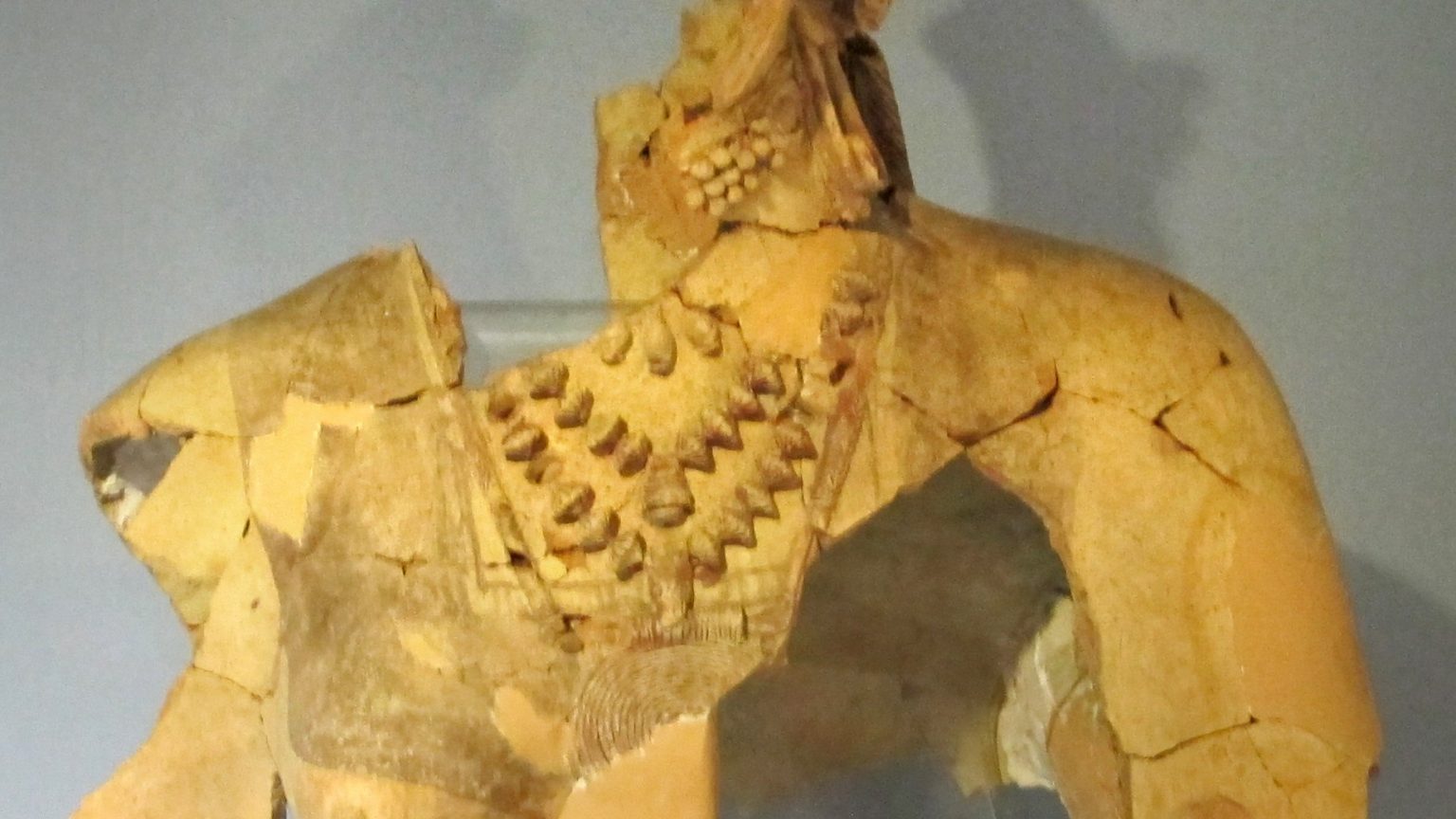
Among the most striking finds is a silver hoard discovered in 2019 in Early Bronze Age levels. Weighing about 406 grams and placed in a pot at the corner of a building’s foundations, it includes spiral rings, headbands and jewellery made with the granulation technique. Erdem compared it to the hoards from Troy and said it may point to early jewellery-making in the area.
Several ancient writers said Homer lived in Smyrna in the 8th century BC on the banks of the Meles stream. Erdem said that if the poet did live in Smyrna, Bayraklı is the strongest candidate.
This season’s work
This year the team is working in the Bronze Age sector, on a large 4th-century BC public building and along the northern defensive line. Erdem said information on the northern, southern and western defences remains limited and the aim is to clarify the phases of the walls and the city’s boundaries.
Finds of grain, animal bones, grinding stones, loom weights and burnt seashells point to a mixed economy of farming, herding, textile production and trade by land and sea, with links reaching inland Anatolia, mainland Greece, the Aegean islands, the Balkans and the Levant.
Sources
Photo: sailko / CC BY-SA 3.0, via Wikimedia Commons