
Turkish academics have proposed a new location for Çimpe Castle, the Byzantine fortress whose capture opened the way for the Ottoman advance into Europe in the 14th century, arguing that it stood at Cintepe near the village of Yeniköy in Tekirdağ’s Şarköy district rather than on the Gallipoli peninsula, Anadolu Agency reported on Oct. 13.
Known in Byzantine sources as Tzympe, the castle has traditionally been placed in the Gelibolu (Gallipoli) and Bolayır area of today’s Çanakkale province, at the neck of the peninsula overlooking the Dardanelles.
Clues from Ottoman tax registers
The new identification grew out of a doctoral thesis by Ayhan Sekili on the Ottoman district of Malkara in the 15th and 16th centuries, supervised by Prof. Levent Kayapınar of Ankara University’s Faculty of Languages, History and Geography. Work began in 2020 and drew on Ottoman tahrir (tax survey) registers, chronicles, place names, geography and earlier surface surveys.
According to a register from 1475, the sub-district of Çimpe (also written Çimbi) contained seven villages. Five of the names have survived with only minor changes, as Müstecep, Bulgur, Kalamış, Sofuköy and Bunak, all in the Malkara and Şarköy area, the researchers said.
Ottoman chronicles record that Süleyman Paşa, son of Sultan Orhan, and his men crossed the Sea of Marmara from Anatolia to Çimpe harbour and then took Çimpe Castle inland. Capturing nearby castles at Gaziköy, Ortaköy and Balabancık then cut off routes supplying Gelibolu, paving the way for its later conquest.
A ruin in the forest
The ruins at Cintepe were first recorded in 2010 by Prof. Zeynep Erdem of Mimar Sinan Fine Arts University during surface surveys on Ganos Mountain, who named them Yeniköy Cintepe Castle. Historian Metin Tetik suggested in a 2023 study that they could be the historical Çimpe.
Kayapınar visited the site on June 12, 2026, with local guides. He said the team found it by asking villagers and forest rangers, and that the building materials appeared consistent with late Byzantine and early Ottoman use. The site has no signposts or road access and is threatened by illegal treasure digging and forest growth. Kayapınar said the view that Çimpe and Cintepe are the same place was growing stronger and called for scientific research and protection.
Assoc. Prof. Ökkeş Narinç of Tekirdağ Namık Kemal University said the findings could change the accepted account of the Turkish entry into the Balkans, and argued that the structure at Bolayır is better understood as a defensive or trench line.
The findings are due to be presented at an international academic panel in November. The Şarköy area, on the northern shore of the Sea of Marmara west of Istanbul, is known for its vineyards and summer beaches.
Sources
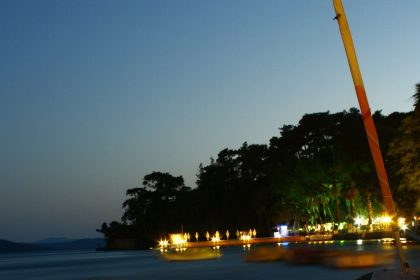
Photo: Ebudun / CC BY-SA 3.0, via Wikimedia Commons