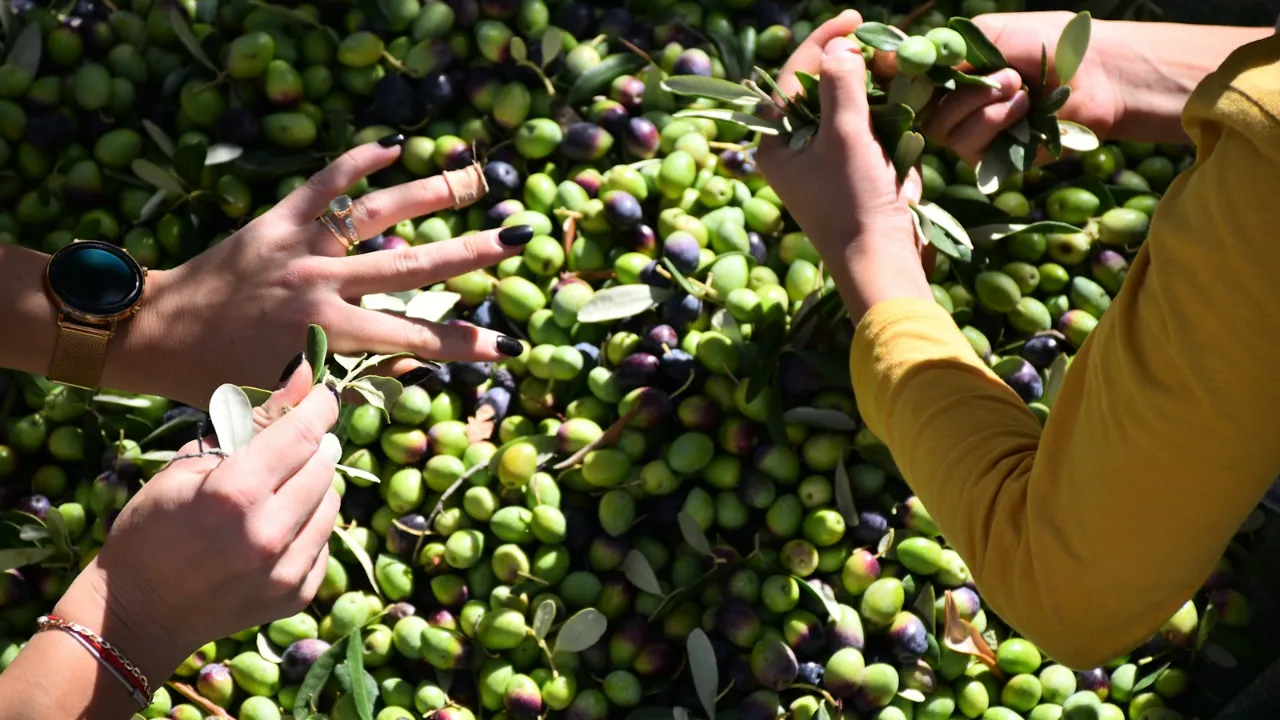

The olive harvest has begun in Antalya, where producers expect the crop to rise by about 40% this season to around 70,000 tonnes, helped by good rainfall after a weak year, the agency DHA reported on Friday.
Bayram Çarkçıgil, general manager of Zeytinpark, an olive grove in the city run by the Antalya Commodity Exchange (Antalya Ticaret Borsası, ATB), said the province had produced about 50,000 tonnes last season. Nationwide, he said, output was expected to climb from 2.45 million tonnes to around 3.8 million tonnes, an increase of about 55%.
An ‘on-year’ for the trees
Olive trees typically alternate between heavy and light crops, and growers call the strong seasons "var yılı", or on-years. Çarkçıgil said this year’s rains had produced a heavy set of fruit, with the trees bearing olives "like bunches of grapes", although the individual olives are slightly smaller than usual.
The harvest started in October, with table olives picked first. Gemlik, the black-olive variety widely grown across Türkiye, makes up the largest share of Antalya’s crop, alongside Manzanilla, Memecik and Ayvalık. The province also has a local variety called tavşan yüreği ("rabbit’s heart"), which the ATB has registered as a geographical indication product.
A protected grove in the city
Zeytinpark covers about 2,600 decares (260 hectares) with some 12,000 olive trees, and is leased by the exchange and protected within the city. Its olives are cured as green table olives, and cold-pressed extra virgin olive oil is produced afterwards. Çarkçıgil said no pesticides or chemical fertilisers are used; the grove is tended only by ploughing and pruning.
Antalya is better known for tourism, citrus and greenhouse vegetables, but olive groves are found in several districts, and Manavgat has been working to build its own olive oil brand. Türkiye’s largest producing regions remain the Aegean, the Marmara region and the southeast.
What a big crop means
A large national harvest usually puts downward pressure on farm-gate prices for olives and oil, which can be good news for shoppers but a concern for small growers, who have complained in recent years that rising labour and fuel costs have eaten into incomes. Türkiye is one of the world’s biggest table-olive producers and exports olive oil to markets including the EU and the US.
For residents, autumn is the season when many villages and family groves sell fresh oil directly, often at lower prices than supermarkets. Food prices remain a key part of the cost of living in Türkiye, and agricultural goods also feed into the country’s export performance. Antalya’s economy continues to lean heavily on tourism, with strong foreign arrivals this year; our guide to living in Antalya covers the city and its districts.
Sources
- Antalya’da zeytin hasadı başladı, yüzde 40 artışla 70 bin ton üretim bekleniyor (Haberler.com / DHA)
- Antalya’da zeytin hasadı başladı: Üretimde yüzde 40 artış beklentisi (Yeni Alanya)
Photo: Tom Tvr / Unsplash License, via Unsplash