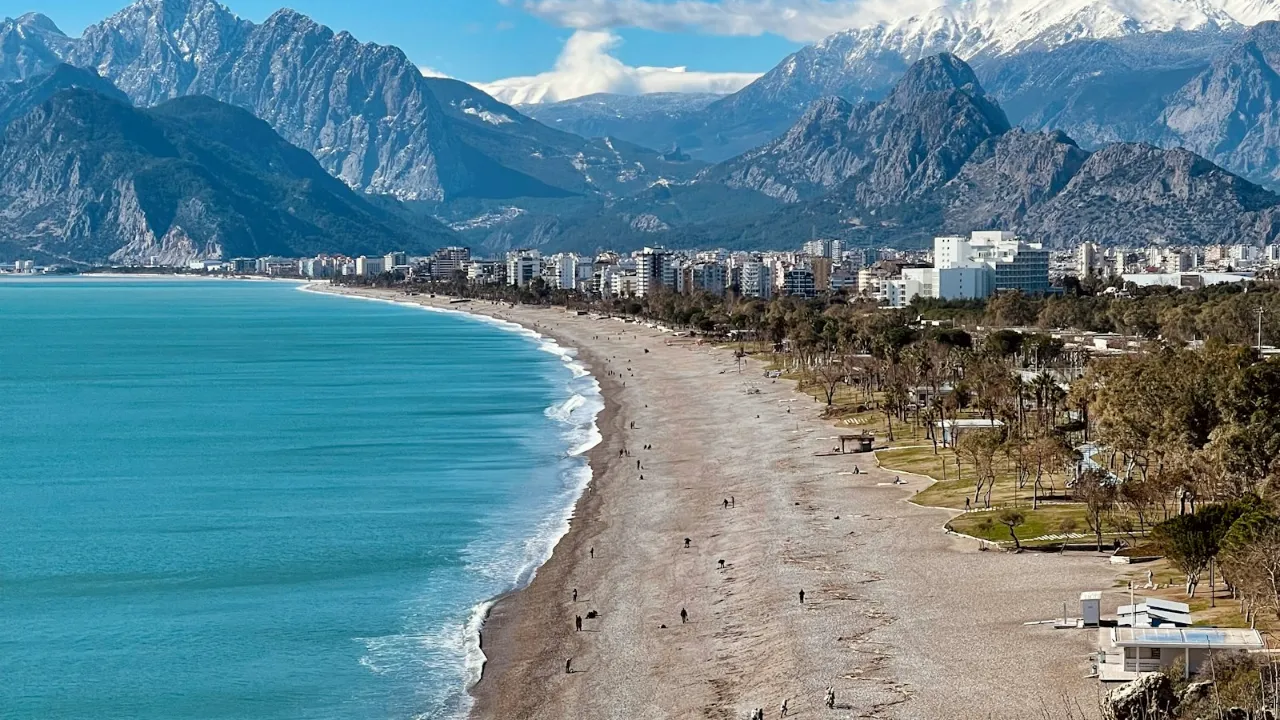

Tourism contributed a total of 170 billion dollars to Türkiye’s economy in 2025, placing the country 14th among the world’s 25 largest travel and tourism economies, according to a comparison by the World Travel & Tourism Council (WTTC) reported by trade outlet Turizm Güncel on Thursday.
The WTTC, a London-based industry body that represents major travel companies, published the ranking on 20 October based on 2025 data. Its figures go well beyond the foreign currency spent by international visitors. They also include domestic tourism, direct activity in hotels, restaurants and transport, output generated along supply chains, and the spending of people employed in the sector.
Where Türkiye stands
The United States topped the list with about 2.63 trillion dollars, followed by China with 1.75 trillion dollars and Germany with 566.2 billion dollars. The United Kingdom (380.2 billion), Japan (343.1 billion), France (311.8 billion) and Spain (291 billion) completed the top seven, ahead of Mexico, Italy and India.
Australia ranked 11th with 198 billion dollars, Saudi Arabia 12th with 178.1 billion and Brazil 13th with 173.8 billion. Türkiye, at 170 billion dollars, came just behind Brazil and ahead of the Netherlands, which was 15th with 132.5 billion dollars. Canada (130.2 billion) and Russia (106.8 billion) were also listed below Türkiye. Countries such as Thailand, Portugal, Switzerland, the United Arab Emirates and Singapore were also among the top 25, although the report summary did not give their totals.
Visitors high, contribution lower
Turizm Güncel noted that Türkiye is one of the world’s leading destinations by number of international arrivals, but that this position is not fully reflected in the economic contribution ranking. The WTTC measure rewards spending per visitor and the size of the domestic travel market as well as arrival numbers.
The figures come as Türkiye’s tourism sector faces a mixed autumn. Official data show foreign arrivals in the first eight months of 2026 and recent reports of job losses in hotels and tourism, while some resort areas have reported weaker shoulder-season demand, including softer autumn occupancy in Bodrum and Kuşadası. Domestic travel spending, which is counted in the WTTC total, has been rising in nominal terms.
For foreigners who live in or invest in coastal Türkiye, the sector’s size matters: tourism supports much of the local economy, rental demand and services in places such as Antalya, Muğla and İzmir. Readers considering a move can find more in our guide to living in Antalya.
The WTTC’s total-contribution figures are modelled estimates and are not directly comparable with Türkiye’s official tourism revenue statistics, which count only spending by visitors.
Sources
Photo: Gidza | Travel Guide & Things to Do / Unsplash License, via Unsplash